
Grand Collaboration at the Griffiss Institute
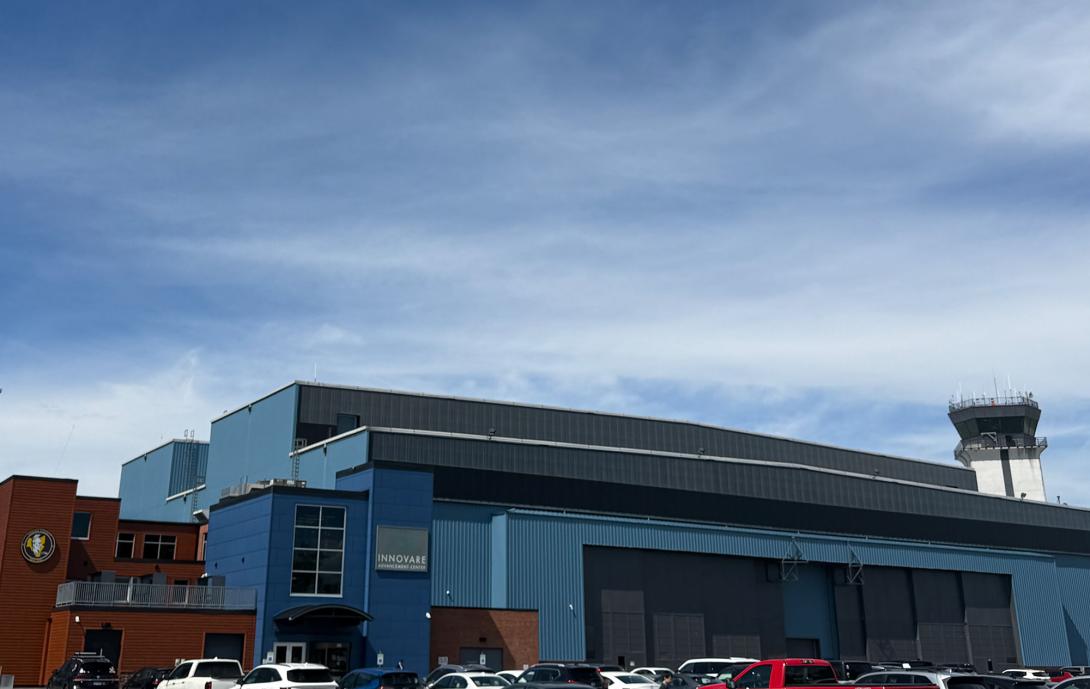
Located in Rome, New York, the Griffiss Institute is an independent nonprofit organization created in 2002, in the wake of the attacks on 9/11.
With the country facing new threats at that time, community stakeholders in Rome identified the need for a nonprofit organization that could help the federal laboratory, contractors and the business community, not to mention the concentration of higher educational assets and engineering schools in the region, explained Griffiss Institute President and CEO Heather Hage in an interview with SIGNAL Media.
“There’s so much potential here in the United States for the big thinkers, the scientists, and the engineers and the entrepreneurs that exist in all of those communities,” Hage said. “[For us, it is about] building collaboration amongst them. A national security need emerges from an agency perspective that then needs support from academic and industry partners to develop cutting-edge innovation. We really master the space of removing the barriers and reducing the friction and helping organizations like that work together.”
The institute, including its new Innovare Advancement Center, is located on the former Griffiss Air Force Base. It is adjacent to the Griffiss International Airport’s active runway, at which the institute, along with New York State partner, NY Unmanned Aerial Systems (UAS), provides a Federal Aviation Administration-designated UAS test site.
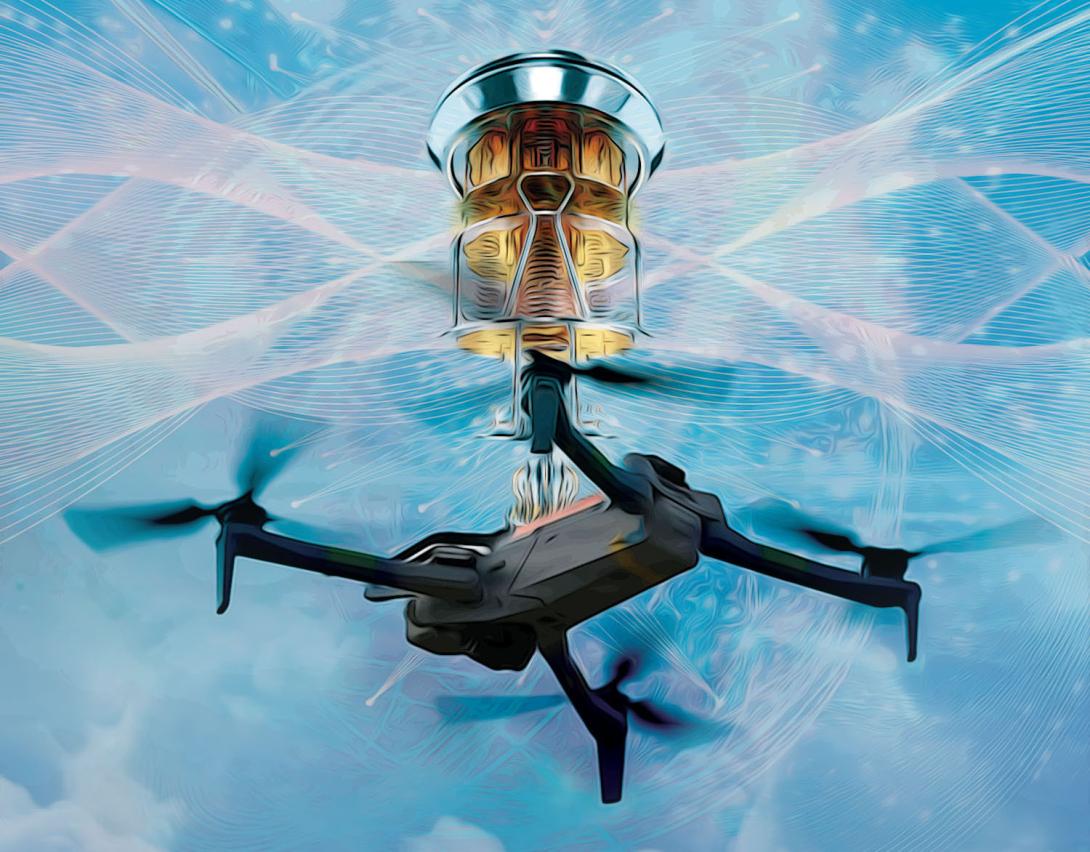
The indoor and outdoor test environments include the so-called Sky Dome, the largest indoor UAS instrumented research facility in the United States. The facility also connects to a 50-mile instrumented beyond visual line of sight corridor that enables real-time, 3D situational awareness and data collection, according to the institute.
However, it is Griffiss’ collaboration with the Air Force Research Laboratory (AFRL) and its Information Warfare Directorate in Rome, under a governmental partnership intermediary agreement (PIA), that is most helping to advance technologies and increase cooperative activities with small business, academia and industry, Hage said.
Their core function as a PIA is to support technology transfer for the AFRL in Rome, something the institute has done for the last ten years. “If a scientist or an engineer at AFRL has a new technology, our team comes in and helps cultivate the disclosure, so that it can move on through the Air Force’s patent processes, and ideally be utilized either within the government or by industry with licensing patents,” she stated.
Additionally, the Griffiss Institute is focusing on the workforce side of technological innovation, after seeing demand signals from government and industry for the development of technical talent, Hage noted.
Griffiss brings to Rome academic researchers from American universities to collaborate “hand-in-hand” with Air Force scientists and engineers at the institute’s facilities. Over the past five years, 240 faculty members have come to the Innovare Advancement Center.
This has proven to be “a very effective mechanism,” Hage shared, benefiting the AFRL, the researchers and the institute.
“In the summer, the faculty tend to have time to devote to a project, and be a force multiplier for AFRL,” the president and CEO said. “At the same time, the scientists and engineers at AFRL are able to influence the direction of the faculty members’ research programs, so that, when they go back to their home institution, they are sort of sharper and more focused on national security topics and issues and problem sets.”
Another effort, called HUSTLE, which stands for the Helping Upstate Science and Technology Leaders and Entrepreneurs, has turned into a nationwide program.
“It is a truly formalized accelerator program where we work with technical points of contact and subject matter experts inside the government to identify their top technology challenges,” Hage shared. “For example, we just ran Cohort 6, which was AI [artificial intelligence] for command and control. We worked with a partner inside the government who identified the top areas where they need solutions. Then the Griffiss Institute goes out and scours the national landscape for the best startup teams, early-stage companies that likely have a product.”
The solutions are commonly in the 3-to-6 technology readiness levels. The institute helps the startups optimize the solutions for the government’s needs. And while it is a specific curriculum, the optimization includes bespoke and custom-tailored aspects to fit both the needs of the company and the government.
“We take them through customer discovery, connect them to end users who can give them insights into how to improve their products,” she said. “And then also connect them to national testing resources, whichever type of test site they may need access to, whether that is here in New York or in California or in Arizona or someplace in between.”
And for more than 10 years, Griffiss has assisted the AFRL in science, technology, engineering and mathematics (STEM) programs and internships. “That is an area that has really matured significantly over the past several years,” Hage added. “What began as a singular internship program here for AFRL has now grown to 750 interns this year at almost 80 industrial locations—and we had about 2,000 applications for those 750 positions.”

A national security need emerges from an agency perspective that then needs support from academic and industry partners to develop cutting-edge innovation. We really master the space of removing the barriers and reducing the friction and helping organizations like that work together.
Before the Department of Government Efficiency cuts to the Department of the Air Force STEM programs last year, the Air Force had been working to develop a national ecosystem of K-12 STEM programming. For the Griffiss Institute, that is a “constraining factor” they are working around as they still work to provide STEM activities.
“The earliest stage STEM programming that the Griffiss Institute is involved at present begins in third grade,” Hage explained. “Over the past five years, we have supported more than 3 million student experiences in the K-to-12 realm. That is STEM kits and curriculum, summer camps and outreach programs for the K-to-12 schools. They each look a little bit different community-by-community because you are looking at different resources in public schools, private schools and homeschools. Our commitment to that early-stage STEM education pipeline is very strong.”
The organization also helps arrange programs for master’s degree and doctorate students, as well as postdoctoral fellowships with the AFRL. “At Griffiss, you can really find your way from coming to us as a third grader, working your way through STEM camps, coming to be an intern, moving on to a fellowship and then ideally, wrapping up your traditional academic pathway and then entering a career with the government,” she said.
In addition, Hage pointed to the Pentagon’s Office of the Undersecretary for Research and Engineering’s successful collegiate engagement program called VICEROY, which the institute has been executing.
According to the office, the program is a “mission-focused cyber-spectrum leadership development pathway” to build critical cyber and electromagnetic spectrum operational skills for future military and civilian leaders. This includes critical cyber-spectrum research, communications, sensing and operational knowledge to underpin quantum–battlefield information dominance.
“What we found so far from the first cohorts that have ultimately graduated and entered the workforce is that about 60% of them are landing in either the defense industry base (25%), the department proper (23%), or in federal or state service (12%), and 40% are going to the private sector,” Hage noted. They are all working.”
“At the Griffiss Institute, we exist to serve American innovation that secures the nation,” she concluded. “That is our ‘why.’”

Comments