
Cyber Talent a Priority for the Department of War
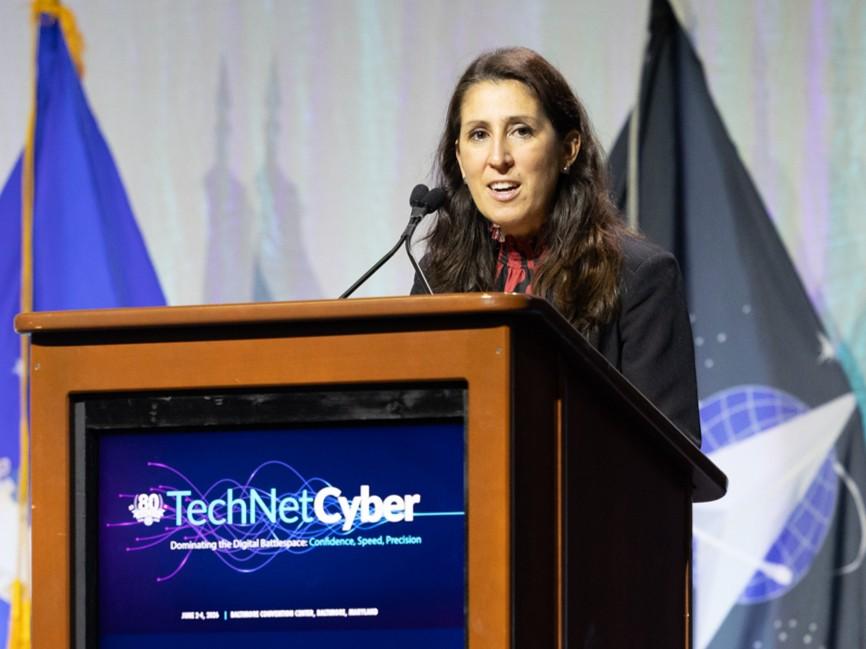
The Pentagon is working toward integrating cyber capabilities into all warfare domains, a move deemed necessary by Katherine Sutton, assistant secretary of war for cyber policy and principal cyber advisor to the secretary of war. The effort revolves around three key focus areas, including talent recruiting and retention.
“Cyberspace can no longer be treated as a separate operational silo,” Sutton said at TechNet Cyber 2026 in Baltimore. “It is the connective tissue of all domain warfare going forward.”
Therefore, Sutton stated, the Department of War (DOW) is executing three key focus areas.
First, cyber capabilities must be woven into operational plans from the beginning.
“Fully integrated multidomain operations can and will provide our senior leaders with capabilities to achieve strategic effects without physical presence, disrupt adversary decision-making cycles and will create windows of opportunity for our conventional forces to exploit,” Sutton said.
Recent operations Absolute Resolve and Epic Fury demonstrated the strength of cyber capabilities, reportedly aiding in mission execution by disrupting adversarial communications and operations.
Secondly, the department is continuing to secure its strategic advantage in cyberspace.
“A purely defensive posture is no longer going to be sufficient in the current threat environment to secure our interests,” Sutton continued. “We must empower our world-class cyber operators across the full spectrum of cyber operations to actively contest adversary aggression, deny our adversaries freedom of movement and proactively disrupt threats to secure the strategic advantage.”
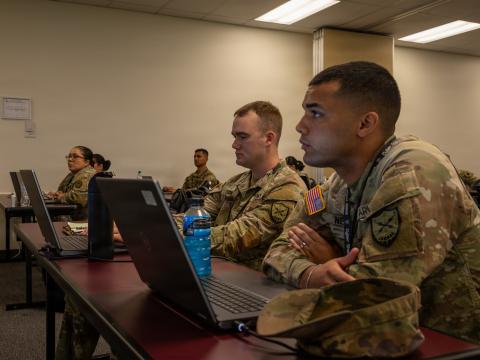
The third priority is on developing mastery and specialized skills within the cyber field. The revised CYBERCOM 2.0 force generation model prioritizes this effort by enhancing career-long operational expertise rather than following a compliance-based framework.
Sutton went on to discuss three cyber talent organizations within the force: the Cyber Talent Management Organization for recruitment and retention; the Advanced Cyber Training and Education Center for mission-specific training on demand; and the Cyber Innovation Warfare Center to provide operators end-to-end capabilities at speed.
“The Cyber Innovation Warfare Center, the CIWC, will be our proving ground, a collaborative environment where operators and industry will sit side by side to test new concepts against realistic threats and operational scenarios,” Sutton said. “The CIWC will bring our warfighters and industry developers into the same room to build and iterate together based on real-world operator feedback by forging this direct link between those who build the tools and those who wield them.”
In an exclusive April 2025 interview with SIGNAL Media, former commander of U.S. Cyber Command and director of the National Security Agency, Gen. Timothy Haugh, said the center was an initiative inspired by Constellation, a collaborative program between CyberCom and the Defense Advanced Research Projects Agency, or DARPA.

A purely defensive posture is no longer going to be sufficient in the current threat environment to secure our interests.
Sutton also called for further adoption of artificial intelligence capabilities to help meet today’s complex demands at speed and scale, echoing previous statements from other senior officials like DISA’s Lt. Gen. Paul Stanton.
“The stakes are clear. In our hands, AI can extend and enhance our military advantages,” Sutton said. “In our adversaries’ hands, it poses a direct threat to our weapons systems, logistical infrastructure capabilities and personnel.”
Therefore, AI adoption is a necessity to automate military cyber defenses and enable machine-speed threat detection and neutralization. The Advanced Cyber Training and Education Center will help integrate and incorporate AI tools, Sutton noted.
Sutton’s team is also developing a skills incentive process to reward cyber operators who have achieved domain mastery.
Finally, the dual-hatted cyber official spoke on an additional cyber talent initiative within the DOW.
“We’re developing a cyber assessment battery, [for] how we assess the people coming into our force, to make sure they have the right skills and aptitudes to be successful and to further refine how we assign them to different work roles,” Sutton said.
The program will be available to uniformed and civilian personnel, she added.
TechNet Cyber is organized by AFCEA International. SIGNAL Media is the official media of AFCEA International.
Comments