
Indo-Pacific’s Enhanced Operations Amid Rising China Threats
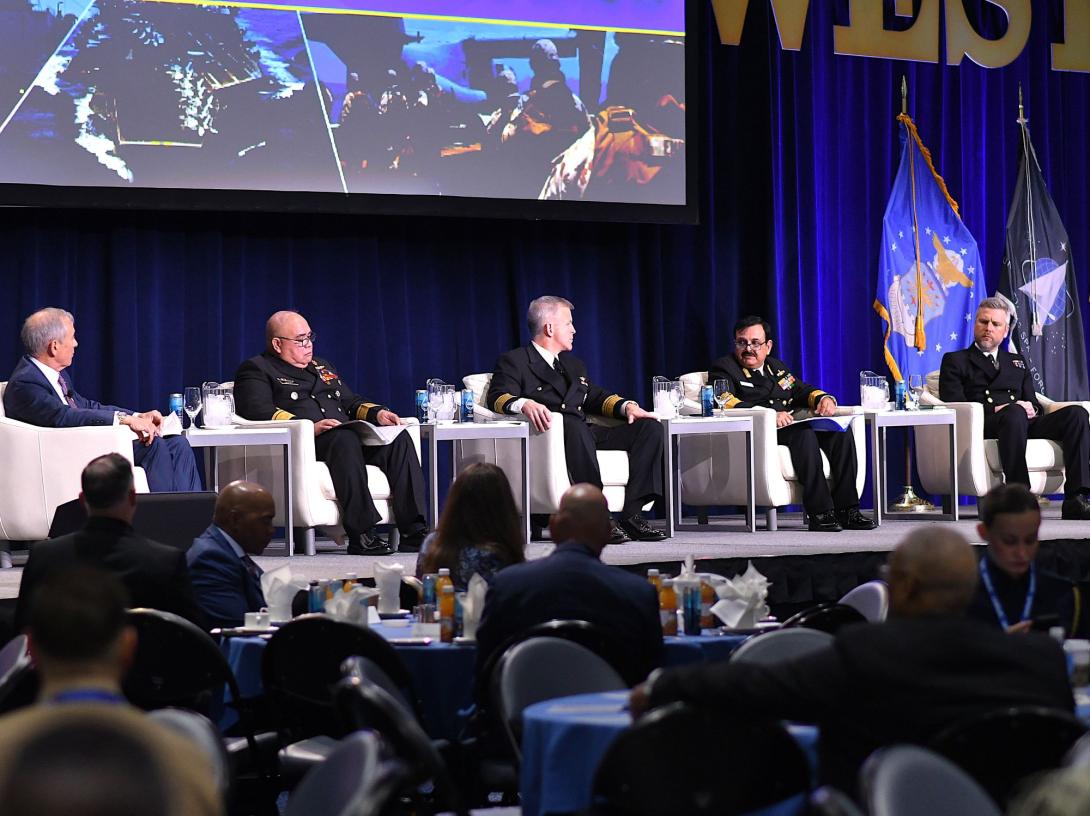
As China continues to make advancements to its modern fleet, nations in the Indo-Pacific region are embracing allied partnerships and emerging technology.
“What’s happening in the South China Sea has been called the most dangerous conflict that no one is talking about,” said Adm. Harry Harris Jr., USN (Ret.). Harris is the former commander of U.S. Pacific Command and former ambassador to the Republic of South Korea. At WEST 2026, he moderated a panel discussion titled, "Allies and Partners in the Indo-Pacific: Readiness, Integration and the Future Fight."
“[The] Philippine Navy has expressed confidence in its ability to navigate the complex security dynamics there, including expanding its fleet, enhancing interoperability with partners and incorporating unmanned systems to meet evolving challenges,” Harris said, before posing a question about the effect of such investments on maritime security and readiness to panelist Rear Adm. Alan Javier, chief of Naval Staff of the Philippine Navy.
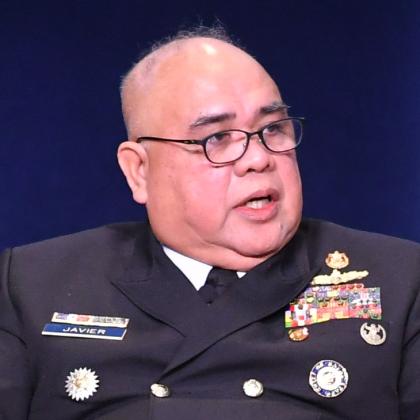
The Philippine Navy is taking steps toward fleet expansion and reorganization, Javier explained. The chief also noted the acquisition of capabilities including frigates, offshore patrol vessels, landing ducts and unmanned surface vessels and drones.
“We decommissioned our legacy vessels to pave way for these new capabilities,” Javier said. Due to such acquisitions, the Philippine Navy has increased its operational tempo in the West Philippine Sea. “More importantly, we are developing and have developed partnerships through defense cooperation, where the Philippine Navy operates as a part of a wider network,” he added.
Javier went on to speak about assertive transparency, a strategy used to face ongoing Chinese threats. “By maintaining continuous presence, proper documentation and exposition on the real-time condition of what we call illegal, coercive, aggressive and dangerous (ICAD) activities of the Chinese in the West Philippine Sea, we could assert our rights and win over the narratives," he said. "And, in the process, we are gaining public support from like-minded nations by denouncing the [ICAD] activities, which is, for us, a support to the rules-based order and, most importantly, international solidarity.”
By maintaining continuous presence, proper documentation and exposition on the real-time condition of what we call illegal, coercive, aggressive and dangerous (ICAD) activities of the Chinese in the West Philippine Sea, we could assert our rights and win over the narratives.
Threats in the Indo-Pacific span across the spectrum of maritime operations, said Vice Adm. Sanjay Vatsayan, vice chief of Naval Staff for the Indian Navy. Through partnerships, the Indian Navy can track each potential threat in the operating area, he said.
“As far as China is concerned, from our perspective … we are monitoring their movements, we are aware of their movements,” Vatsayan said, noting the increased presence of Chinese naval and research ships. “The bottom line is that we need to share information amongst the partners, keep each other abreast of these challenges that are coming up in the Indo-Pacific region.”
WEST 2026 is co-hosted by the U.S. Naval Institute and AFCEA International. SIGNAL Media is the official media of AFCEA International.



Comments