
NGB Pursuing Culture Change and Standardization Solution To Achieve Data Centricity
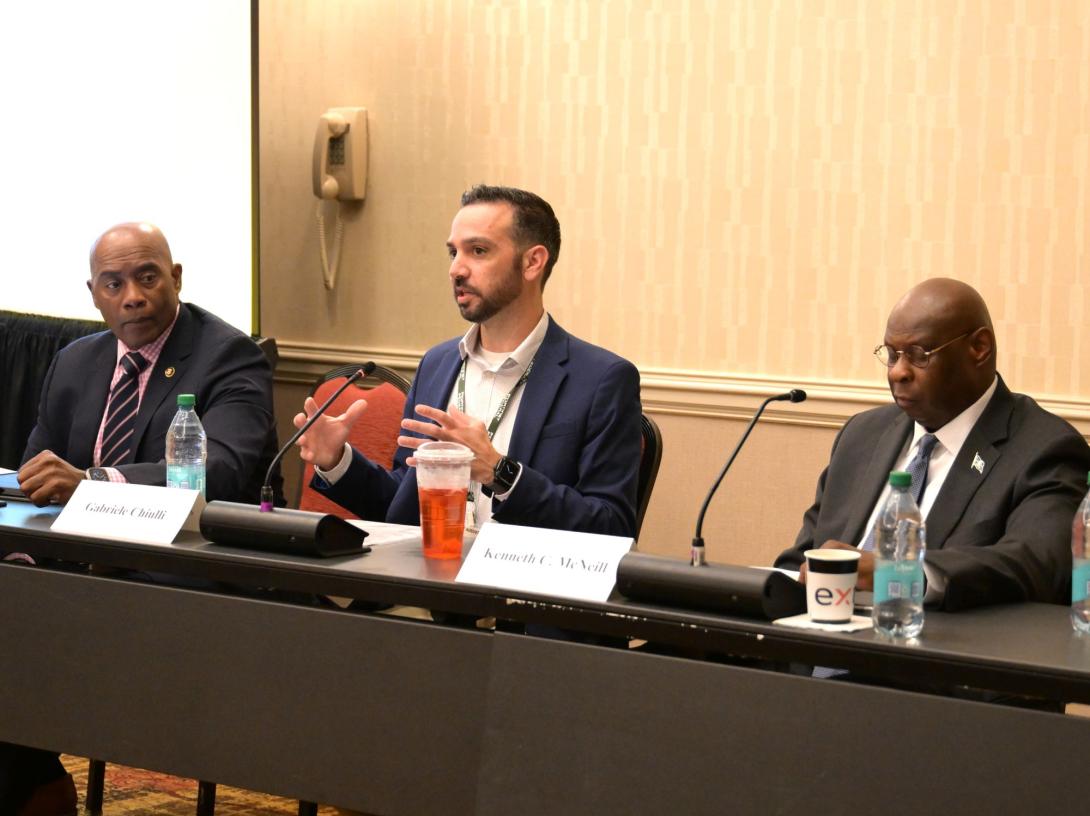
U.S. National Guard soldiers are starting to confront one of the most significant organizational and technical barriers preventing a smooth transfer of data across the joint force: cultural resistance, according to Kenneth McNeill, chief information officer (CIO) at the National Guard Bureau (NGB) and director of the Command, Control, Communications and Computers Systems Directorate.
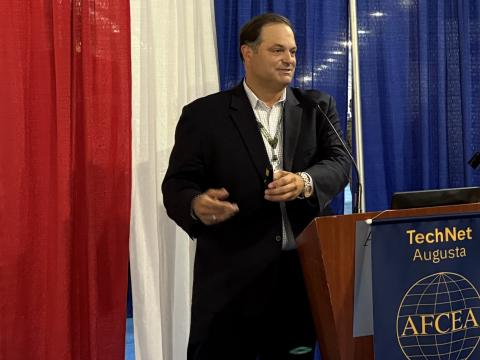
More specifically, Guardsmen must overcome cultural resistance related to data and artificial intelligence (AI). The approach comes as the Pentagon rapidly moves toward data centricity to enable the seamless flow of information across the joint force. In the past, NGB leaders did not analyze data and AI from a homeland defense perspective, but to be prepared as soon as possible, this process has to change. During a panel at TechNet Augusta 2026, McNeill announced this shift is beginning.
This summer, the NGB made history. During the FIFA World Cup 2026, the bureau deployed AI and data capabilities for the first time to the 10 host states, and throughout the tournament, leaders directed personnel to the match locations where they watched the process unfold and observed a plethora of lessons learned. McNeill described the operation during the panel.
“We had the department go down and look at several of the states and look at how we were using the AI tools and how we were doing the interoperability piece with our civilian agencies, state government, local government and first responders, and how we were connected to them as we move forward, and that worked really well,” McNeill said.
One major insight that officials gathered through this process related to interoperability and zeroed in on the need for the NGB to improve and enhance its relationships with state national guards. Even though McNeill said the NGB's connection with the local military presence worked well, he also made sure to note that it was not seamless.
“The one key takeaway, from an industry perspective, that we still need help in, is with that interoperability piece down in the states because we’re not forward deployed in that everyday mission,” McNeill explained. “So, you’re going to be talking to organizations that don’t have some of the same tool sets that you have, but you have to still secure the network and make sure that you’re not allowing capability on the Department of War Information Network that could get into the department really in a bad way with our adversaries.”
McNeill further explained that because of the NGB's vast network, which consists of individual national guards from each state, territory and Washington, D.C., being on the same page as them can be challenging. “The attack surface for us, when we talk about 54 states and territories [and D.C.], is huge. Each state is different. It is not a uniform model where Florida is Georgia and Georgia is Maryland, so those attack surfaces and who they connect to vary. We still have room to improve on that, but I think we are slowly changing the culture.”
Accomplishing the culture change to stress and heighten interoperability cannot only strengthen partnerships between the numerous national guards, but it may also lead to standardization, particularly regarding the adoption and deployment of AI tools, which McNeill said is the biggest concern. NGB leaders must standardize the data governance in the states, which is difficult due to each national guard being different. During the panel, McNeill called this task the toughest mission or problem set leaders attempt to tackle every day.
“We have work to do, and that’s the hard part with 54 different perspectives of what an adjutant general needs to do to support a governor in the time of crisis,” McNeill said. “I think we’re getting there. I think the FIFA World Cup and America 250 were events that we were able to show success at but highlight some of the gaps that we still have, and we focus on the gaps. The success piece is great, but it can lure you to sleep.”

The one key takeaway, from an industry perspective, that we still need help in, is with that interoperability piece down in the states because we’re not forward deployed in that everyday mission.
Gabriele Chiulli, acting CIO for the U.S. Army, was on the panel as well, and he and McNeill emphasized the importance of developing and procuring capabilities that the Army and NGB can both take advantage of. The gentlemen called these “dual-play” and “dual-handed” technologies. The benefits of this type of approach are as simple as saving time, money and resources.
“We are trying to open up as much capability to the national guard [as possible],” Chiulli said. “We’re trying to be as prescriptive or descriptive on capability as we roll it out and say this is suitable for you guys as well. I think it’s a dual play.”
“We don’t have money falling from the trees separately, so we’re trying to be responsible from a resource capability as we go forward,” McNeill said. “We want to continue to capitalize and use the capability that the two services have already pushed as dual-handed.”
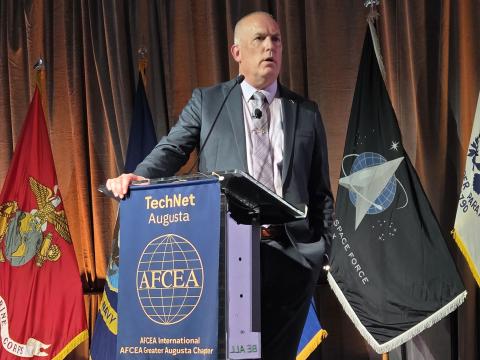
TechNet Augusta is organized by AFCEA International with help from the U.S. Army Cyber Center of Excellence. SIGNAL Media is the official media of AFCEA International.
Comments