
Sea Service Chiefs Strive To Balance Operational Readiness and Modernization
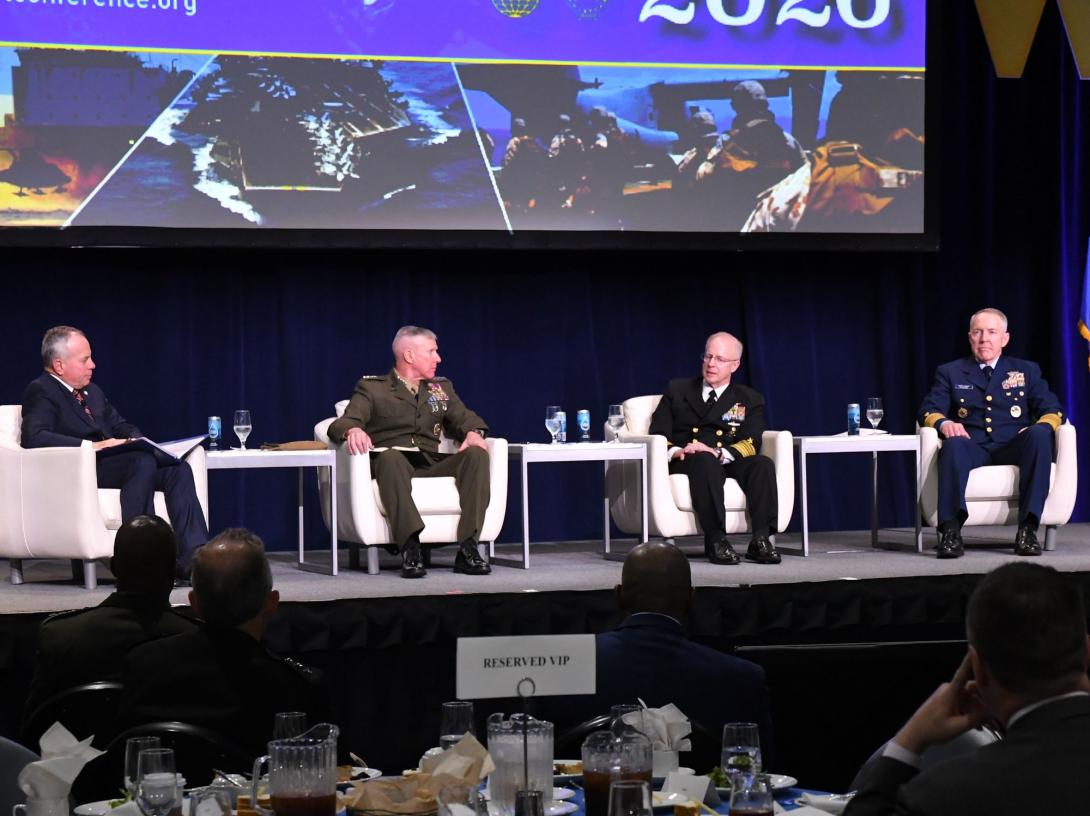
U.S. military leaders continually attempt to maintain the combat readiness of current forces while also investing in future forces through modernization efforts, but sometimes one can get in the way of another.
Adm. Daryl Caudle, chief of Naval Operations, said, during a February 11 WEST panel session, that when modernization efforts platforms take too long, they interfere with the optimized fleet response plan, a strategic initiative designed to enhance fleet readiness, streamline maintenance and improve deployment predictability.
“If you look at our optimized fleet response plan, OFRP, which is in conception a 36-month conveyor belt that generates force, predominantly strike groups, to do a seven-month deployment, we end up with a target on that at about 42 to 44 months, some over. If you go look at the reason why I'm over, what you'll find at the heart of that is modernization overrun. In those DDGs [guided missile destroyers] in particular—and it can be the carrier itself when it’s in a modernization period, not just a normal maintenance period,” he reported. “Those modernizations availabilities are overrunning, and so that’s forcing us off plan there to deliver the forces we need by our design of our training and force generation process.”
Caudle added that he has been pushing for tighter modernization schedules, but challenges exist to streamline those schedules. “As we roll these ships and platforms off with things like racks-for-life and virtualization of combat systems and over-the-air upgrades, that's going to work, but I've got a big part of the fleet that can't do that today.”
He offered the F-35 fighter jet as an example. “To modernize F-35, even, on a big deck, all those things just take too long. And I can't break it up in a way to eat that big elephant across availabilities so they don't have to do it all at once.”
He also mentioned “whole-structure fabrication work,” which according to Microsoft Copilot, refers to the complete design, construction and assembly of a ship’s major structural components from raw materials, following strict U.S. Navy standards to ensure they meet performance, safety and durability requirements.
“There's just way too much whole- structure fabrication work that goes into these modernizations as well," Caudle said. "So that's a problem.”
Having too many baselines also offers challenges, meaning the Navy can sometimes have an excessive number of distinct design, engineering or operational baselines that define a ship’s configuration, capabilities and performance requirements. “And then at the end of the day, I just have way too many baselines. I don't know the number, but I can tell you, it's probably a number like 40 different baselines in the Arleigh Burke class.”
The Navy Consolidated Afloat Networks and Enterprise Services (CANES) program offers another example. CANES is an enterprise information system modernization effort that integrates hardware, software and network services for naval operations. It includes consolidation of legacy networks, enhanced cybersecurity and various communications capabilities, such as email, chat and video conferencing.
“When you say the word CANES, it means nothing. You could be CANES one—it's got Windows NT on it—and you could be CANES seven, that's just been installed on somebody, and we call all that CANES,” he said.
Caudle indicated that given the size of the force, the service has to depend on modernization to overmatch potential adversaries.
“You know this idea of modernization is a very frustrating thing for service chiefs," he explained. "I can't just say we're not going to do it, but I've got to do it much more efficiently and much more on time.”
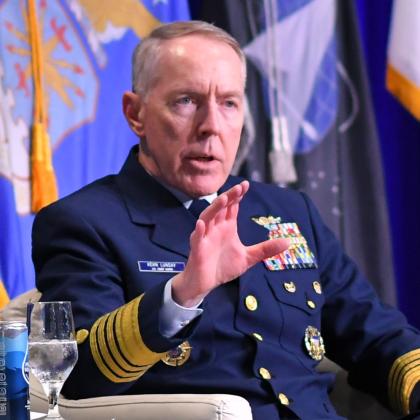
If we don't understand what readiness is for whatever the mission is, whether it's emerging or a sustained mission, we’re not going to be able to be ready when the mission demand requires.
Adm. Kevin Lunday, commandant of the U.S. Coast Guard who also served on the panel, outlined an array of maintenance, sustainment and modernization focus areas that must be covered under the service’s $25 billion reconciliation budget. He reported that $2.2 billion automatically went toward restocking inventory control points for aviation surface fleets “to be able to address our most critical gaps immediately.”
The rest, he said, goes toward modernization and fleet renewal. “We’ve got to be able to do both at the same time, and not only address the mature readiness side, but then the people side to match that.”
Lunday questioned what readiness even means. “If we don't understand what readiness is for whatever the mission is, whether it's emerging or a sustained mission, we’re not going to be able to be ready when the mission demand requires, and we’re not going to be able to look over the horizon and take the actions and decisions today to position the force with the right capability to be ready for the challenge ahead.”
Gen. Eric Smith, the U.S. Marine Corps commandant and third member of the panel, touted the benefits of quantifiable standards for readiness.
“You have to actually have denominators," Smith said. "You got to have an actual checklist that says this unit has met its METs, its mission-essential task lists, and it is ready to fight. It’s got its personnel. It’s got its funding. It’s got its spare parts. Its aircraft are up. It’s got its readiness.”
WEST 2026 is co-hosted by the U.S. Naval Institute and AFCEA International. SIGNAL Media is the official media of AFCEA International.


Comments