
Space Systems Command Earns Promising Overall Scorecard for 2025-26 Year
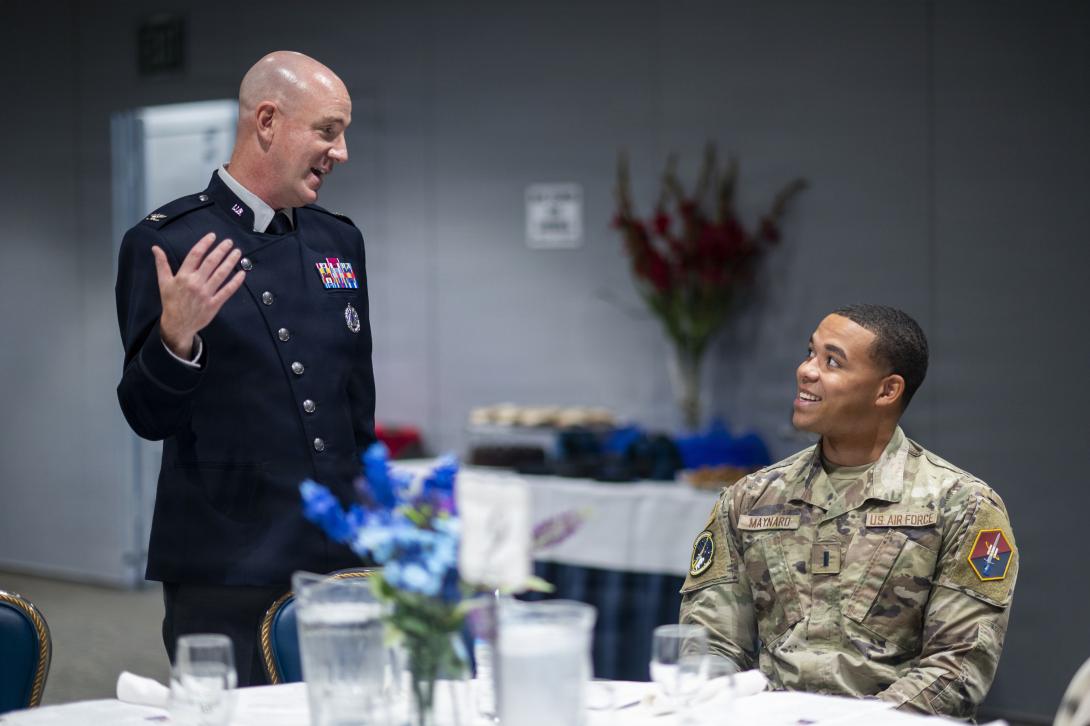
Space Systems Command (SSC) is "delivering with minimal areas of improvement," said Lt. Gen. Philip Garrant, commander of the SSC, Wednesday at Space Industry Days 2026 in Los Angeles. This conclusion was the culmination of an extensive feedback-gathering process that unit officials conducted using internal and external data. They used this information to give grades to three different groups of people: capability users and partners, industry, and workforce.
"The data and feedback both indicate that SSC is delivering the baseline capability required, and in some cases, delivering more than expected," Garrant explained during his keynote address at the event. “For industry, the data shows real progress in access, commercial pathways and awards. The stakeholder circle reminds us that the experience is still less consistent than the activity data alone suggests, particularly when it comes to clarity, follow-through and conversion to mission outcomes."
He went on to say, "For the workforce, stakeholder sentiment is stronger than the underlying data. Our people generally feel connected to their teams, supported by leadership and empowered to do the mission. The data, however, highlights the capacity challenge, retention and staffing gaps, and resourcing pressures, particularly at senior levels."
Garrant said the SSC needs to address its workforce the most, and he blamed himself for the shortfall.
"Capability users and mission partners improved, industry improved, but the workforce moved in the other direction," he said. "That's the trend I need to own. Measurable progress in delivery and partnership, alongside a workforce challenge that requires continued leadership attention. That combined result led directly to our overall assessment."
"Our 2026 assessment is delivering with minimal areas of improvement," he added. "That is an improvement from last year's assessment. Minimal does not mean no work to go. It means the foundation is delivering, and we're focused on closing the remaining gaps."
The SSC is actively working to resolve the workforce issue. Garrant and his team are putting an emphasis on hiring and concentrating on building back the workforce through new efforts. They are traveling to colleges and universities to recruit students who are about to enter the workforce in relevant fields. Relatedly, they have created new operating locations in Texas and the Washington, D.C. region, which lets them pursue talent in the areas where prospective employees live.
"Oftentimes, people go to school near home and they don't want to move out of the state, so [the new operating locations] let us get after some talent in places that are easier to hire or perhaps not such a high cost of living," Garrant said in a response to a question asked by SIGNAL Media during a media roundtable on Wednesday.
Garrant and Col. Andrew Menschner, deputy commander, Space Systems Command, both said they were not surprised by the workforce shortfall.
"Last year and early into this year, [we had] pretty dramatic impacts to the workforce from a drawdown perspective," Garrant said.
"I don't think it's surprising that we've seen some concerns from our workforce," Menschner agreed. "We're working through those with hiring and building back up that number and developing the force."
The SSC lost 600 civilians to a retirement program, 150 traditional base support positions and 450 acquisition individuals. In response to the "pretty big cut" to the workforce—14% to be exact, according to Garrant—SSC leaders aim to onboard 100 individuals per month.
Returning to the scorecard details, specifically, in each category and based on the information they collected from the force itself and stakeholders, officials assigned teams one of five grading parameters: delivering above and beyond, delivering with minimal areas of improvement, delivering with moderate areas of improvement, delivering with significant areas of improvement and not delivering.
The data gathered from stakeholders deemed that each of the three groups—capability users and partners, industry, and workforce—was "delivering with minimal areas of improvement." The data from the SSC stated capability users and partners and industry were performing at that level as well. As mentioned above, the workforce, however, delivered with moderate areas of improvement, meaning the workforce encountered insufficient staffing and skills, but they still completed the mission, Garrant explained.
Despite there still being areas of improvement, the SSC is overall in a better place than it was at this time last year and the year before, per the scorecard. The evaluation process gave the group a "delivering with minimal to moderate areas of improvement" grade in 2025, which itself was a higher mark than what the scorecard determined for the 2024 year: delivering with moderate to significant areas of improvement.
"We still have risks to manage, but the overall trend is clear: SSC is delivering today's mission while transforming for tomorrow's fight," Garrant stated. "The great news is the feedback from our mission partners reinforces the trend that we are seeing across commands, deltas and mission teams."
He added that groups are fostering better relationships with one another. "There is noticeably a stronger connection among operators, developers and teams, along with better operational acceptance planning and greater focus on fully burdened capability. We also heard that SSC is communicating challenges more clearly. Overall, the sentiment is that SSC is delivering at scale and strengthening its connection to the operational community, and in some cases, exceeding expectations."

Comments