
Joint Interagency Task Force 401 Shares Guide on Counter-Drone Technologies

The Joint Interagency Task Force 401 (JIATF 401) released a comprehensive guide on March 9 outlining sensor technologies used to detect and recognize drone threats, along with the legal guidelines that regulate their use.
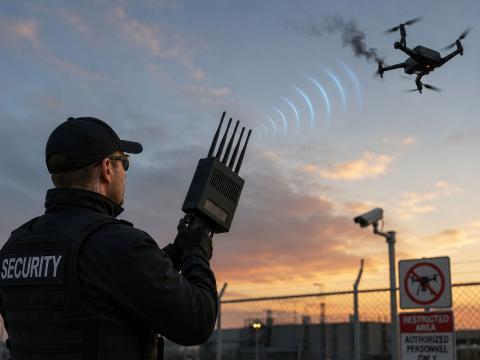
The guide, titled Counter-UAS Operations: Safeguarding Freedoms and Preserving Privacy, provides insight into the nonintrusive sensor technologies that allow security personnel to maintain airspace awareness without interfering with civilian drone operations, such as radar, radio Frequency (RF) detection and electro-optical/infrared.
Brig. Gen. Matt Ross, USA, director of JIATF-401, said: “This guide is part of our commitment to transparency, ensuring that as we deploy these critical technologies, we do so in a way that is responsible, respects privacy and maintains public trust."
A key part of the guide explains how these systems comply with federal law. For example, it lists that under Federal Communications Commission (FCC) Regulations, “All RF-based equipment, including detection and any permitted mitigation systems, must comply with all FCC rules regarding frequency use and equipment authorization.”
"Countering drones is not just a battlefield problem—it's a homeland defense imperative," said Ross. "Our goal is to integrate sensors, effectors and mission command systems in a distributed network that protects service members and American citizens alike."
Through this guide, JIATF 401 aims to strengthen its commitment to advancing counter-drone capabilities while maintaining the transparency essential to public trust.

Comments