
Fresh Efforts Ease Hiring Issues at DISA
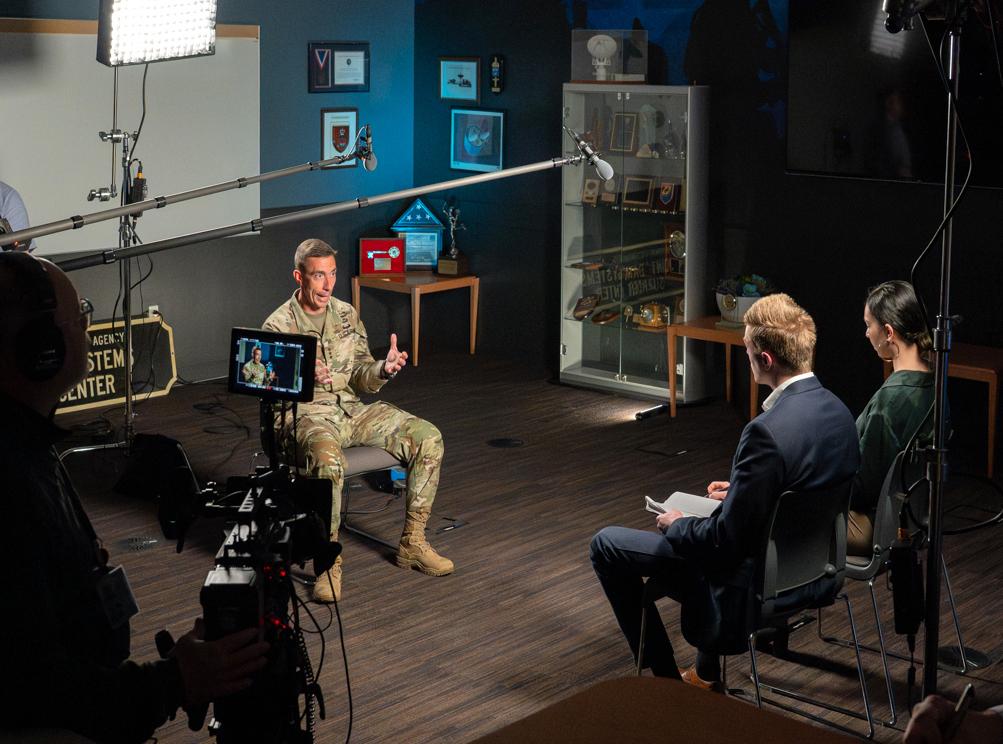
A new strike team model, scholarship for service program and a change in perspective are helping steer the Defense Information Systems Agency (DISA) in the right direction and fill voids in the workforce, ideally leading to a more effective and dominant warfighting staff and performance on the battlefield.
The strike team approach directly led to DISA onboarding 57 people on a single day in late April, according to Lt. Gen. Paul Stanton, USA, director of DISA and commander of the Department of War (DOW) Cyber Defense Command. The director added that 32 of these individuals came to work for DISA from outside the agency.
Furthermore, DISA leaders are deploying the strike team to environments that are rich with potential talent, especially college graduations. Not only are these commencements filled with individuals seeking to enter the workforce, but they also provide strike team members with the opportunity to target personnel who they know are prepared and qualified to take on the challenges of the cyber domain. This development is because of a proactive approach taken by several offices and agencies within the federal government recently. They reviewed the coursework of colleges and universities to ensure that the alumni are equipped with the abilities that the cyber field requires.
“We’re seeing a steady cadence of being able to bring the right level of talent onto the team,” Stanton said during an exclusive sit-down interview with SIGNAL Media. “We have a separate team [on April 20] down in Georgia and South Carolina on a recruiting trip going in anticipation of college graduations that are right around the corner and hiring folks that have the right skill sets. And we know they have the right skill sets because the DOW chief information officer (CIO), the National Security Agency (NSA), DISA and the service cyber components have validated the curriculums of these universities from which these students are graduating. We know that they took courses and did well in areas that we’re interested in.”
Stanton added that he and his team are pursuing people proficient in network engineering, data analytics, data engineering and coding spaces. “We’re targeting some of, I would call them, the hard skills to fill out; the engineering arms of both the DOW Cyber Defense Command and DISA are where our focus is currently,” Stanton said. “It doesn’t ignore, however, all of the enablers. If you’re on the team, you’re on the team for a reason, and our ability to execute a strike team recruiting model is because we have high-quality human resources professionals that are working in our J1 as a key example.”
The strike team will attend AFCEA International’s TechNet Cyber 2026 event, taking place from June 2 to 4 in Baltimore. Stanton said that while at the event, team members will be on the floor heavily recruiting entry-level and seasoned talent.
Earlier this year, DISA leaders assigned the strike team to another event, where they extended 47 contingent job offers, and within three weeks of the event, the agency added 32 individuals to the workforce, per Stanton.
These small but revealing applications exemplify the early success and potential of the strike team model, which has superseded the traditional hiring process within DISA.
The strike team goes on recruiting trips to attend college graduations, job fairs and other hiring events to streamline talent acquisition and fill the open positions swiftly. The groups consist of human resources personnel and technical experts who know the details and duties of the position they are looking to fill. While at the events, human resources specialists offer their expertise in the logistical process of onboarding someone into government service, while technical specialists demonstrate and convey to prospective candidates the job they are hiring for and the type of person they are looking for to undertake it. The initiative also gives them the opportunity to take initial steps, such as filling out paperwork and making a contingent job offer, on the spot, drastically cutting down on the time it takes to onboard talent, Stanton said during a keynote address at the Cyber Workforce Summit 2.0 earlier this year.
Additionally, DISA, in conjunction with the DOW Cyber Defense Command, is conducting rounds of interviews to hire people as part of the CyberCorps: Scholarship for Service program, an initiative that Stanton called “fantastic.” The program gives financial support for up to three years to the recipients, who must be undergraduate or specific graduate students studying cybersecurity education. In return, they must agree to work in a cybersecurity-related position for the U.S. government following graduation. The agreement also requires them to work in that role for a period of time equal to the length of the scholarship, according to CyberCorps officials. The CyberCorps: Scholarship for Service program is extremely competitive, as DISA and DOW Cyber Defense Command personnel will select 32 individuals out of a whopping 800-person applicant pool, per Stanton.
“Imagine the quality of talent that we will bring on to the team,” Stanton said. “[The data analytics support cell] is what we were recruiting these positions for, and I’ve looked at a number of the resumes personally, their transcripts in school, the courses that they took and their level of professional maturity. Even though they’re young, I’m excited about the future.”
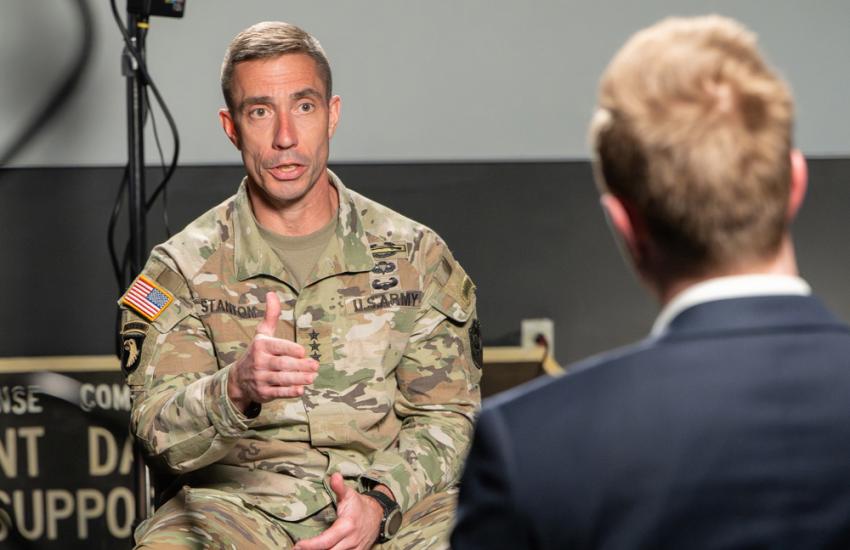
Another way defense officials are expanding the pool of potential candidates is by prioritizing aptitude and cognitive abilities, in addition to specific skill sets. Stanton stated that the DOW CIO invested in early assessment tools that address aptitude and cognition to a greater extent than individual skills.
“I certainly want deep thinkers on our team,” Stanton said. “Our asymmetric advantage is free thought. The fact that our workforce can sit in front of their computer screen or in their living room or at their place of duty and think about how they want to solve the problem, as opposed to being compelled to do it or otherwise not being able to let their minds wander.”
“Our ability to apply free thought gives us the opportunity to hire somebody who was a musician or a mathematician or something that’s not necessarily directly aligned to computer science and network engineering or cybersecurity, but [someone who] demonstrates cognitive capabilities and aptitude,” the director of DISA added.
Additionally, departments and agencies within the federal government are sharing talent to gain a warfighting advantage. Specifically, Stanton stated that the NSA sent interns to DISA to assist in building their capabilities.
These initiatives and changes regarding recruitment all represent a mindset transformation taking place at DISA. Last June, Stanton urged cyber professionals to view cybersecurity through a warfighting lens, and nearly a year later, the director says he can feel that shift happening.
“It would be motivational to walk in during one of our update briefings where we’re getting an operations and intelligence update, and the entire room is filled with analysts and engineers and acquisition professionals and contracting professionals and planners pulling together in recognition of supporting warfighting requirements,” Stanton reported. “There is absolutely a sense of changed and changing culture that says we must perform our mission in order to support those that might be in harm’s way. It’s motivating.”
While DISA leaders seem to have the recruitment and hiring process on the right path, the retention numbers remain steady. The retention statistics are consistent with what they have been historically, Stanton stated. He added that the individuals who leave are doing so because they are ready for their next endeavor, not because they were disgruntled.
Comments