
DISA Goes Full Steam Ahead on Multi-Partner Environment, Zero Trust

For the Defense Information Systems Agency (DISA), readiness means taking a comprehensive and proactive approach to secure network environments. With efforts like the multi-partner environment (MPE) underway, the agency is prioritizing modernization while acknowledging a potential future shift in coalition partnerships.
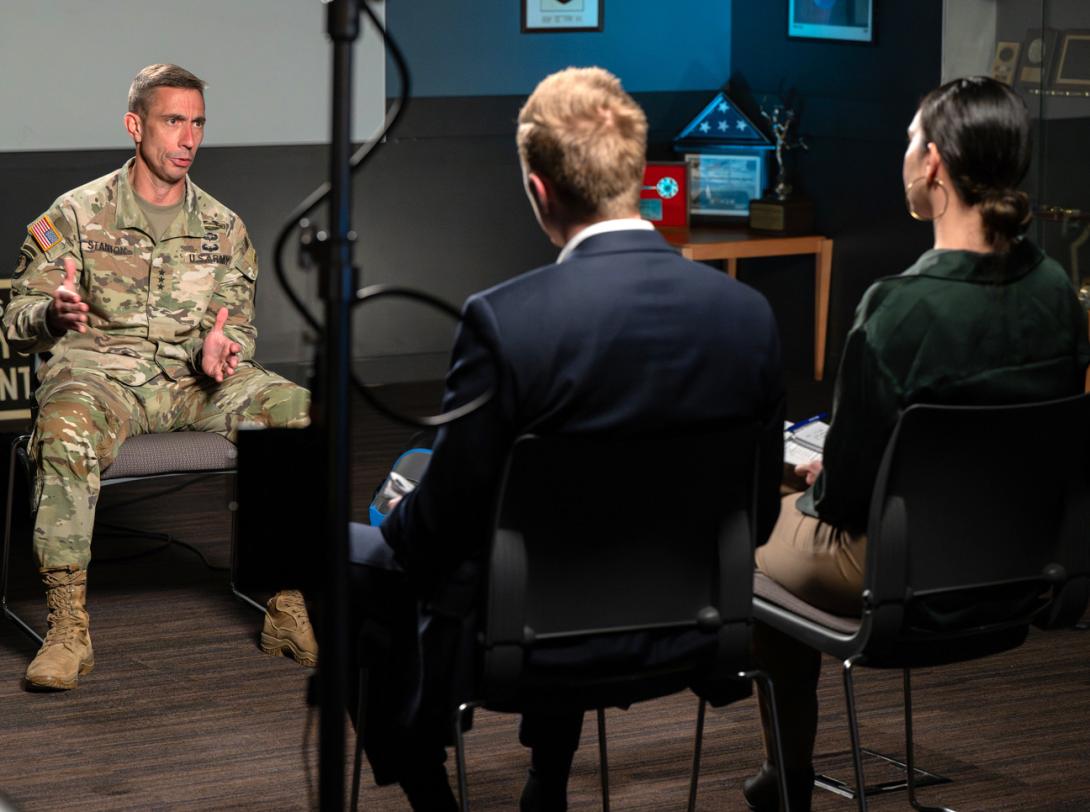
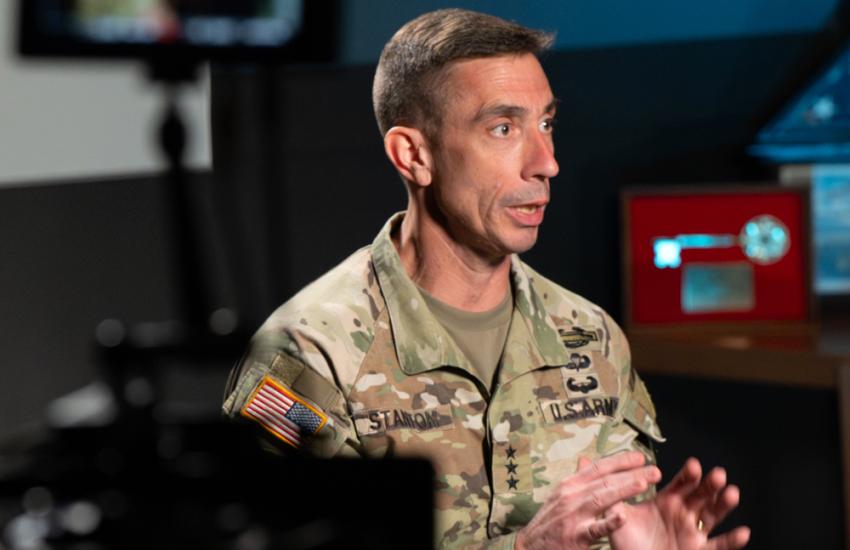
In an exclusive interview with SIGNAL Media, Lt. Gen. Paul Stanton, USA, DISA director and commander of the Department of War Cyber Defense Command, spoke on the sub-unified command’s campaign against adversaries.
“We don’t look at events in isolation,” he stated. “We look for their correlation, and we know that if the enemy has a zero-day-based capability against a particular technology, they’ll use it whenever they can against our infrastructure.”
Therefore, the lieutenant general said, defense must be arranged accordingly. “We’ve really matured our thinking; we’ve adjusted our organizational construct; we’ve added robustness for our planners, for our intel analysts, for our data analysts, and we’ve also improved our training,” Stanton continued.
In September 2025, MeriTalk reported on DISA’s accelerated development of MPE to allow U.S. and allied nations to share data through a hybrid-cloud solution. The announcement followed a 2021 MPE implementation plan launched by the Pentagon in 2021. The program, Stanton said, was a perfect fit for the combat support agency.
Partnership with the Department of the Air Force, as well as additional Department of War agencies, has been critical in the MPE process, he explained.
“The transition will take a couple of years to be fully finalized ... but there’s no break and no pause. In fact, we’re accelerating into functionally relevant capability to deliver at time and need of the warfighting community,” Stanton highlighted.
The director went on to discuss the next steps for MPE implementation.
“All the combatant commands have asked for command and control (C2) capabilities, the elusive common operational picture (COP) that they want to put up in their [operations] center,” he stated. “We want to provide a standardized and secure architecture where the COP, as presented in all of the combatant commands, is based on the same architectural foundation, so that parts can be reusable and so that combatant commands can communicate with each other effectively during the global fight.”
The agency is in the process of developing the necessary security gateway, as well as the zero-trust architecture, analytic environment and cybersecurity service provider roles.
Currently, Stanton noted, the pieces are coming together in support of the U.S. Indo-Pacific Command (INDOPACOM) area of operations, with plans to expand to other combatant commands.
“We’re driving really hard, aligned to the exercise schedule and operations and activities that INDOPACOM has asked us to so that we can again deliver that functionally relevant capability,” he added. With this year’s exercise, Keen Edge, already completed, the agency is prepared to participate in Valiant Shield and Keen Sword later this year.
The lieutenant general also spoke on the evolution of shared classified networks with allies and partners.
“We know that we’re going to have to share secret data with our partners,” Stanton told SIGNAL Media. While historically a controlled interface between allied nations’ networks allowed for safe communication, the process may have to change.
“That won’t work in a future where you don’t know who the coalition partners are ahead of time,” Stanton said. “The partners in the coalition may ebb and flow and change and adjust based off of the operating environment, so we have to be able to share data effectively using modernized technology, zero trust and the application of it is game-changing in terms of very fine-grained access controls that bound the risk but will allow us to share secret-based data across an entire coalition.”
The MPE is central for this type of operation, the DISA director shared, which would include building that secure access point and a zero-trust environment that controls data access. While still unable to completely eliminate risk, the MPE’s logging infrastructure to run analytics can effectively bound it.
“When you implement a zero-trust architecture correctly—and I emphasize the word, ‘correctly,’ because it’s not just the engineering solution or the applications or the security appliances, it’s putting them together and then using them effectively—that requires training,” Stanton said. “This is a weapon system, and so we need our [cybersecurity service provider] CSSP service members, civilian, contracted, in uniform, to fully understand that architecture and employ it in an optimal way.”
DISA has created a training plan for CSSPs specifically focused on the agency’s implementation of its zero-trust solution titled Thunderdome. Announced in 2022, Booz Allen Hamilton-contracted Thunderdome is expanding to an enterprise-wide program. Last year, DISA reported on the solution’s perfect 152/152 score in zero-trust compliance.
“We’re never resting on the exact implementation because the technology continues to evolve,” Stanton stated.
The agency is incorporating the use of artificial intelligence (AI) mechanisms into its data tagging and analytics operations. In collaboration with industry partners, DISA created “an environment that was intended to be extensible and accommodate the latest technologies,” Stanton said.
DISA has created a training plan for CSSPs specifically focused on the agency’s implementation of its zero-trust solution titled Thunderdome. Announced in 2022, Booz Allen Hamilton-contracted Thunderdome is expanding to an enterprise-wide program. Last year, DISA reported on the solution’s perfect 152/152 score in zero-trust compliance.
“We’re never resting on the exact implementation because the technology continues to evolve,” Stanton stated.
The agency is incorporating the use of artificial intelligence (AI) mechanisms into its data tagging and analytics operations. In collaboration with industry partners, DISA created “an environment that was intended to be extensible and accommodate the latest technologies,” Stanton said.
Industry partners are participants in the program and continuously offer the most modernized approach.
“It’s one thing to understand the principles of zero trust—it’s a framework. It’s very different to understand the very specific appliances that are being used to implement the zero trust,” Stanton said. “We want to train as we fight. We want to train on the actual systems that are inside the environment.”
CSSP training is essential, he continued, while also noting a qualification pilot that wrapped up in early March. The pilot included 15 CSSP-assigned individuals who participated in five weeks of developmental training. A pre-test and a post-test saw a 30% improvement, Stanton added.
“We contracted with several vendors [who] built simulated artificial intelligence-informed environments, so the scenario is continuously changing,” he said. “It was very realistic in terms of its composition.”
The training involved very specific individual and collective tasks, and all participants passed the qualification.
In preparation for the second iteration of the exercise, which was scheduled to take place not long after the conversation with SIGNAL Media, Stanton outlined changes he’d like to implement.
With a larger number of participants, Stanton aimed to include a wider geographical footprint. “I want folks from different combatant commands, [areas of operation], having the opportunity to participate,” he said.
Thunderdome and identity, credential and access management, often referred to as ICAM, are central to the implementation of the MPE, Stanton said.
“The next step is horizontal scale. So, once we get it right, and we will in support of a combatant command, we then want to ... ‘harden and containerize’ and make it deployable more rapidly, improve and scale the training associated with it so that I can now take this weapon system and hand it to multiple trained organizations across the footprint,” he explained. “As we do that by design, we’ll be rolling out Thunderdome, zero trust and ICAM to other organizations.”
Speaking on the timeline, Stanton noted the need for architecture validation through an exercise-based, realistic scenario. Conditions are already being set from a resourcing, hiring and training standpoint to support the horizontal scale implementation.
When asked whether the aspired goal will be achieved within the next year, the lieutenant general replied succinctly: “It better.”
Comments