
NATO and EDA Eye 2030 Deadline for Cloud, AI and Emerging Technology
Through its digital transformation implementation strategy 2.0, NATO is on a path to be ready for multidomain operations by 2030. Similarly, the European Union is chasing the same deadline for defense readiness.
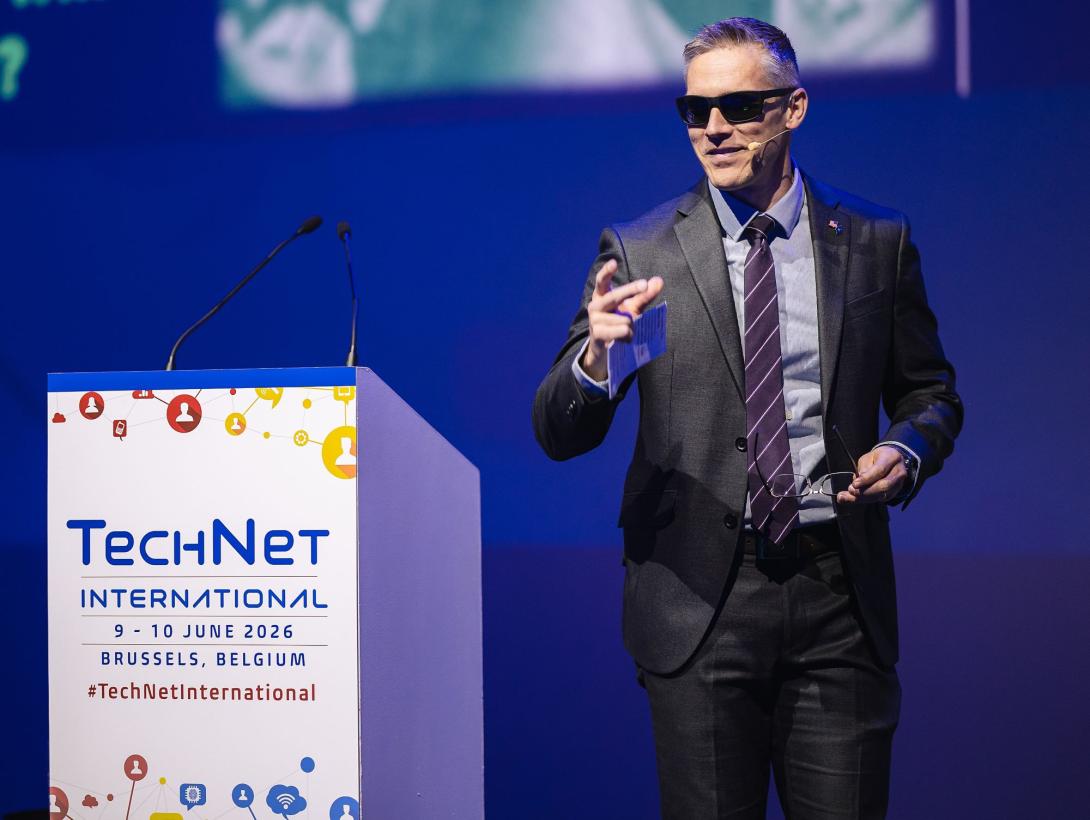
Nathan Anderson, digital policy adviser at the U.S. Mission to NATO, spoke at TechNet International 2026 on Wednesday.
“The first technology I want to talk about is cloud adoption, and the vision here is that by 2030, NATO has an alliance-wide cloud ecosystem that allows data access and transfer at all levels across domains out to the point of need,” Anderson said.
The ecosystem would be federated, causing a subsequent set of challenges the alliance will need industry’s help with.
Anderson began with the digital backbone. “This is the connective tissue, the infrastructure that’s going to go into developing a digital backbone to allow data-sharing.”
At the unclassified level, NATO has successfully migrated to cloud, Anderson shared. The alliance is currently underway to migrate to cloud at the secret and restricted levels.
“The second area is a federated cloud architecture. How do you take 33 entities, that is 32 allies and the NATO enterprise, and federate them in cloud and have the right balance of data sovereignty among the nations while also allowing interoperability and data access?” he noted.
The third cloud ecosystem challenge is edge computing, "extending cloud from core through fog out to the resource-constrained edge to the point of need where mission-critical data can be accessed by those users who need access to it,” Anderson said.
The policy adviser went on to discuss artificial intelligence (AI) and data, noting a vision to have an alliance-wide data-sharing ecosystem that would integrate the digital backbone for compute power and be operated by AI experts.
The vision requires several mindset shifts, with one centered around AI specifically.
“From a military organization standpoint, we must recognize that military AI is in this race, and we need to pivot to a wartime footing where cycle times, adoption rates are key variables in order to keep pace with what’s happening in the AI ecosystem,” he stated.
Task Force Maven NATO Director Col. Arnel David explored this topic during his keynote address the day prior, noting record-breaking adoption and integration rates through the Maven Smart System capability.
Anderson also called for a reconsideration of NATO’s governance and policies to enable data-sharing for risk awareness. Consistent AI education for the workforce is also key, he emphasized.
Additionally, Anderson noted the strength in smaller teams, a notion also shared by David, who credited much of his project success to his team of just eight people.
Anderson said there is value in “having this model where developers are working side by side with users to get that direct operational feedback and getting after specific problems in teams that are small, accountable and that can expand and then contract when needed based on specific mission problems."
Emerging technology is another priority area, with focus on capabilities such as quantum sensors.
“The advanced position, navigation and timing (PNT) sensors are able to provide accuracy at unprecedented levels, both in positioning data and picosecond timing signal from these sensors, so how do we take assured PNT sensors and be able to cohere that data amongst a swarm of drones, be able to use that on platforms and ensure that NATO is able to operate in a GPS-denied contested environment?” Anderson offered.
The speaker additionally mentioned next-generation communications, including 5G and emerging 6G networks.
Furthermore, NATO must maintain its spectrum capability to protect critical frequency bands that allow for operations and communications on the battlefield, Anderson stated.
Anderson called for more agile digital acquisitions, especially in digital and software capabilities. “The reality that software is never done, like previous capabilities have been, procurements have been delivered. We need to have a continuous iteration cycle with our software and our digital delivery capabilities,” he said. Requirements should be outcome-based.
The most challenging part of agile acquisition may be a cultural transformation, Anderson suggested.
On another note, the alliance must shift from static period security accreditation processes to an agile process to avoid operational liabilities, he said. One aspect to this is “being able to inherit the pedigree of security accreditation that has been done on software that’s brought into the alliance.”
An automated process for continuous monitoring of software against existing compliance will ensure agile accreditation.
There’s a lot of things going on, and we still have a long way to align more effectively.
Anderson also addressed zero-trust architecture.
“NATO is assuming a zero-trust posture, that is, inherently, our networks are untrusted,” he said, while referencing key zero enablers like identity, credential and access management (ICAM) and data-centric security.
“Both of these areas … are standards being put into place now within NATO. These are being implemented, and we’re going to be validating these through our operational experimentation,” Anderson said.
The digital expert also offered thoughts on open standardization, highlighting the need for machine-readable formats to be automatically implemented across the digital ecosystem.
Regarding 3GPP and military Five Eyes, Anderson noted the importance of “partnering with industry during the development of these standards … and then also NATO participating in standards development bodies."
Validating these standards for interoperability and effectiveness is key, he said.
“Underlying all of this … NATO recognizes the critical value of strategic partnerships with our industry, our academia, and so we rely on you to help us develop the solutions to many of these problem sets to help us develop our reference architectures, our standards, and so we implore you to join us in developing these standards,” he concluded.
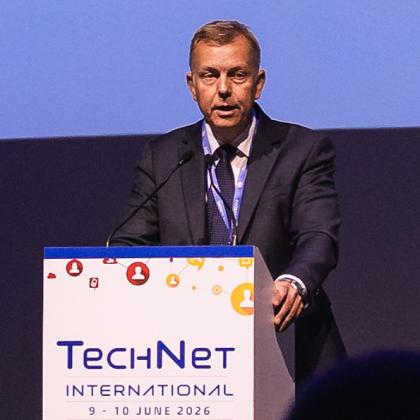
Anderson's statements echoed some of the same themes raised by Anders Sjöborg, deputy chief executive at the European Defence Agency (EDA).
Sjöborg similarly stressed the crucial need to invest in emerging technologies that could be strategic enablers for the EU’s defense readiness.
Capabilities such as AI, cloud and quantum computing have the “capacity to disrupt and transform traditional approaches to warfare even more than they already have, and without mastering them on our own, Europe will not be able to take full responsibility for its own defense,” Sjöborg stated during his address Tuesday.
Like NATO, the EU has set a 2030 deadline to strengthen its defense industrial base, boost investment and close capability gaps. The Defence Readiness Roadmap 2030 also calls for interoperability of military capabilities.
Having many of the same member states, Sjöborg noted that avoiding duplication between NATO and EU defense efforts has long been a priority, with the EDA working to align with and complement NATO's standardization work.
“There’s a lot of things going on, and we still have a long way to align more effectively,” Sjöborg said.
TechNet International is organized by AFCEA Europe, AFCEA International's European office. SIGNAL Media is the official media of AFCEA International.


Comments