
NATO Prioritizes Data-Centricity for Digital Sovereignty, Interoperability
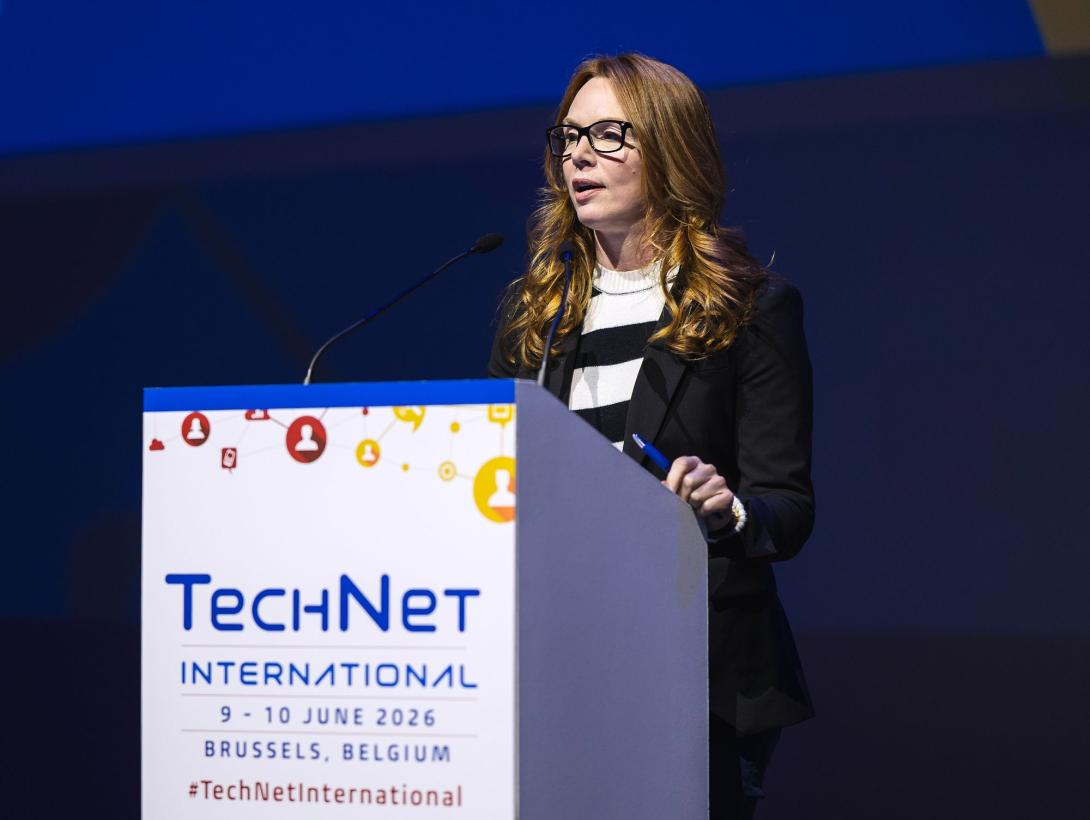
Along with extensive discussions on modernization, data-centricity was the overarching theme across this year’s TechNet International conference in Brussels. As European nations pursue digital sovereignty, NATO member states are driving secure interoperability for multidomain operations with data-centricity as the key enabler to meet the challenge.
“For 20-plus years, there’s been immense focus on network-centric security, where vendors and agencies are focused on securing their own systems, their own applications, their own networks,” said Jason Blais, vice president of product design and program management at Mattermost.
Today’s focus on data-centricity, however, marks a shift from NATO’s long-sought network-centric operations, which aimed to leverage information technology to gain decision superiority, as Blais noted.
“Concerning connectivity, technology allows merging formerly segregated of different operational domains, aiming at a seamless unified network with even interoperability with civil communication systems,” a 2025 NATO article reads. “This can only be leveraged through a shift from a network-centric to a data-centric approach.”
Notably, the efforts sparked opposing views and conversations about the U.S. influence on Europe’s capabilities gap.
The subject dates back to 2002, when the question of sovereignty created complex trans-Atlantic dynamics. An archived written debate via NATO Review between Yves Boyer and Burkard Schmitt showcased this point.
“Europe would become more dependent on the United States since Washington would be the sole holder of the ‘keys’ of the ‘system of systems’ which is the essence of ‘network-centric warfare,’” Boyer wrote.
Boyer argued that while interoperability with U.S. partners remains critical, it is crucial to avoid dependency. Schmitt, while agreeing with some of Boyer’s points, stressed the importance of the trans-Atlantic partnership, referencing its vitality for peace and stability. Still, he said, Europe must enhance its own security policies.
“When the collaboration moves from one domain to multi-domain, that concept simply breaks,” he continued, explaining that data-centric security (DCS) allows for data to remain secure at appropriate classification levels no matter where it’s moved within systems.
Blais, whose presentation centered around artificial intelligence (AI) for cyber defense, said DCS enables AI integration across domains. His key points focused on sovereignty, DCS and an ecosystem-native approach, all three of which Blais claimed are necessary to achieve decision advantage through AI integration into multidomain operations.
“When you’re talking about AI running autonomous workflows, that data-centric security concept becomes even more critical in order to ensure that none of your sensitive, personal … or classified information gets in the wrong hands,” Blais said.
Capt. Raffaele Rotella, NATEX at NCIA, also spoke on this, affirming that AI cannot become an enterprise-wide capability without the data that gives it operational meaning.
In 2025, NATO’s Data Strategy for the Alliance (DaSA) listed acceleration of the organization’s transition into data-centricity as one of its key objectives.
With the DaSA, the alliance seeks to leverage “quality data for seamless interoperability and integration across all domains by providing guidance for managing NATO data and operationalizing its use for joint and multi-domain operations.”
Additionally, the 32-nation organization aims to identify gaps in the transition, as well as recontextualize efforts under a data-centric governance and coordinated data management framework.
NATO’s Data Centric Governance Operating Model governs how data assets are managed, the strategy explains. The model “ensures effective management of data assets, integrates data priorities into strategic initiatives, promotes compliance with data governance principles and fosters collaboration among data officers across the alliance to address challenges and oversee implementation.”
The Digital Policy Committee is to guide the alliance’s data management efforts for coordination with other strategic initiatives.

". . . you can implement interoperable data-centric security, where every nation keeps its own infrastructure, but data can move between them in a trusted way.
Furthermore, the DaSA encourages the establishment of data-centric governance boards for all nations.
Prioritizing data curation, governance and workforce development, DaSA is pursuing a 2030 goal for a fully integrated Alliance Data Sharing Ecosystem. The target is part of a greater 2030 digital transformation campaign.
Angel Smith, president of the global public sector at Virtru, additionally made a case for DCS’s role in data sovereignty.
“The conversation around data sovereignty tends to get treated as a sovereign versus international,” she began. “I’m going to challenge that framework because these two concepts could 100% absolutely live in harmony together.”
Data sovereignty is not a territorial problem but a technical one, Smith argued. In a physical environment, multiple militaries working together does not mean they lose sovereignty, but rather that they join forces to operate in unison through standards, governance and trust. Data should be treated the same, she stated.
Smith, who served seven years in the U.S. Marine Corps, offered three separate options for allied interoperability strategies. “You can grow one nation’s expertise until others will all join it; you can build a new international enterprise that everybody joins; or you can implement interoperable data-centric security, where every nation keeps its own infrastructure, but data can move between them in a trusted way.”
Although the first two options may work, they require significant trade-offs and challenges for nations joining the operational environment, Smith said.
TechNet International is organized by AFCEA Europe, AFCEA International's European office. SIGNAL Media is the official media of AFCEA International.


Comments