
First Responders' Communications Network Expands Post 9/11

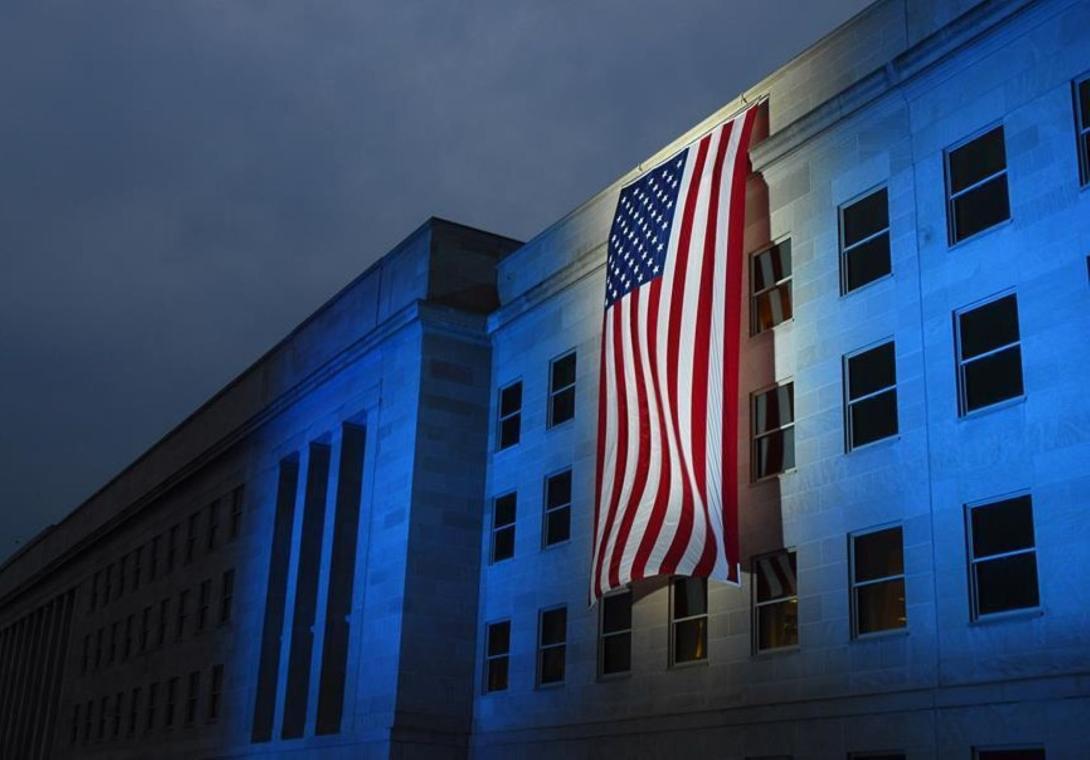
When the United States was attacked 25 years ago on September 11, public safety officials did not have a reliable and secure communications network to use when responding. The lack of ability to communicate across radio systems meant tragedy for firefighters as well as victims.
The inaugural public safety network, the Nationwide Public Safety Broadband Network, known as FirstNet, was created to address that gap. The governing FirstNet Authority and partner AT&T have been building on that crucial communications network since then, said Matt Walsh, assistant vice president, FirstNet and NextGen 9-1-1 Products, AT&T, in a recent interview with SIGNAL Media.
AT&T was selected to build and maintain FirstNet in 2017, in conjunction with the FirstNet Authority, which is made up of emergency responder experts.
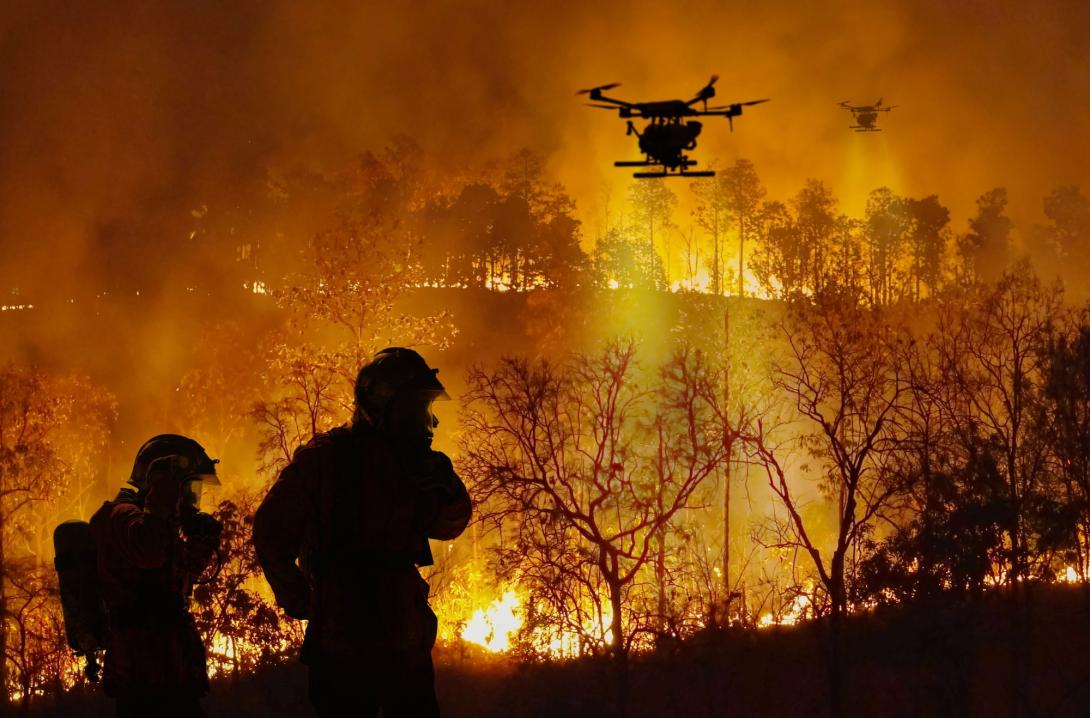
Recent technological advancements to the network’s capabilities include compact rapid deployables (CRDs), low-Earth-orbit (LEO) communication solutions and even amphibious vehicles that go from land to water in flooded or debris-strewn areas to move people, equipment or fuel to unreachable areas. These additions are all reserved for public safety officials to use during wildfires, floods, tornados, hurricanes and other severe storms.
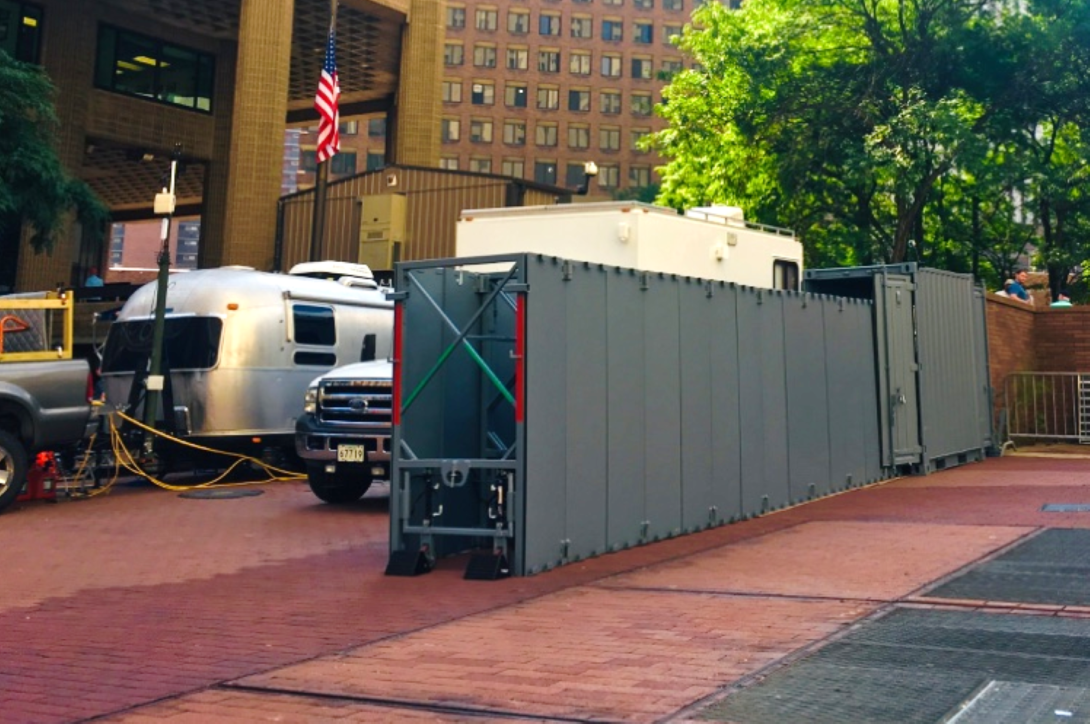
The CRDs are portable cell sites that provide up to two miles of FirstNet coverage that do not need commercial power availability. FirstNet has also added LEO cell trailers and LEO emergency communication portables, which are portable cell sites that deliver temporary cell service where traditional service is unavailable.
There are just over 190 portable network assets for dedicated public safety use.
But it is the new FirstNet network core that is key, Walsh noted. The network core is a novel 5G standalone core dedicated to and built for public safety.
“One of the things that has been absolutely critical overall to delivering the mission to public safety is this standalone core,” Walsh noted. “That is everything in the back of the network that enables the communications, that routes the traffic, prioritizes the traffic, controls the interaction basically of the towers to the devices.”

It enables 5G services in priority and preemption to the public safety community, Walsh stated.
“As we have moved to the standalone core, we have kept that value proposition of a dedicated core for public safety,” he explained. “There is no reliance on the old LTE core. With the previous version of the LTE core, you kind of had this bridge to 5G that we called nonstandalone, and that meant you got 5G towers, but LTE core. Now you have 5G towers and 5G core.”
This means emergency responders have increased security and access to faster upload speeds and improved responsiveness to support modern public safety operations that could include data-heavy body-worn cameras, sensors and other mission-critical devices.
“The move to the 5G core gives us all kinds of capabilities in the future, and in the near term, it means faster speeds,” he said. “You are going to get faster uplink speeds. So, when you are sending videos as a first responder, sharing that situational awareness, you are going to get faster speeds with that. We have seen in our testing up to 15% faster, and then faster download speeds, 30% faster.
For emergency responders, it is those upload capabilities and speeds that are increasingly important to public safety use, as compared to commercial users on AT&T’s network. The demand for uplink reinforced the need for the public safety 5G standalone core, Walsh said.
“You cannot have a dedicated public safety network without a dedicated core, because at some point you are going to be sharing resources,” he stated. “You might be able to slice portions of the network and say, ‘I gave them a portion of my network,' but eventually, as you move into the core infrastructure, you are going to be sharing resources with the rest of the traffic of the network, and that all pauses [public safety communications]."
The 5G standalone core is wholly independent of the need for sharing commercial traffic, Walsh clarified.

The move to the 5G core gives us all kinds of capabilities in the future. And in the near term, it means faster speeds.
During the FIFA World Cup matches in the United States—which Walsh equated to supporting the public safety communications of 60 Super Bowls—they saw firsthand the unique difference between public safety use and consumer demand on networks.
“The intensity that is on the network for something like that [is considerable],” he shared. “We set up a network operations center just dedicated to FIFA, and we were able to go and compare a first responder’s use of the network versus that of a commercial user. You can imagine, everybody there at the stadiums is wanting to share photos and use social media. Even with that, we saw first responders use four times that of a standard user ... For first responders, uploading pictures, uploading videos, sharing that information with other first responders gives them that immediate contextual awareness so that they can operate a whole lot better.”
Walsh also noted that it was a multiyear effort to build the public safety core infrastructure.
And while he did not disclose the number of standalone cores, he said they were designed with geodiversity in mind.
“I can tell you that there are more instances geographically than our commercial network,” he acknowledged. “Even though there are far fewer users on FirstNet than there are on our commercial network, we give them more diversity across the country to ensure that we have that reliability.”
The company plans to keep rolling out new solutions for emergency responders, such as the recent Fusion product that allows location- and video-sharing via the traditional narrowband, land mobile radios (LMRs) that are in wide use, and enables cross-communication on different radios or devices.
“We brought Fusion forward so that it can provide that video,” he said. “It provides them a platform to share pictures and location. But the other thing it does is it allows anybody on virtually any network to be able to communicate with one another. You can use your LMR radios with Fusion. You can come in with another carrier’s device and still communicate with Fusion users. It creates this interoperability layer so that everybody can talk to each other, and they can be added very, very quickly, in minutes. And they can also share that situational awareness.”
For emergency responders working in the face of the unknown disasters and storms of the future, that is a welcome addition.
The September issue of SIGNAL Magazine features articles about post-9/11 innovation. Read more in the stories below.
Comments