
Head First: Scientists Use Brain Phantoms To Tackle TBI
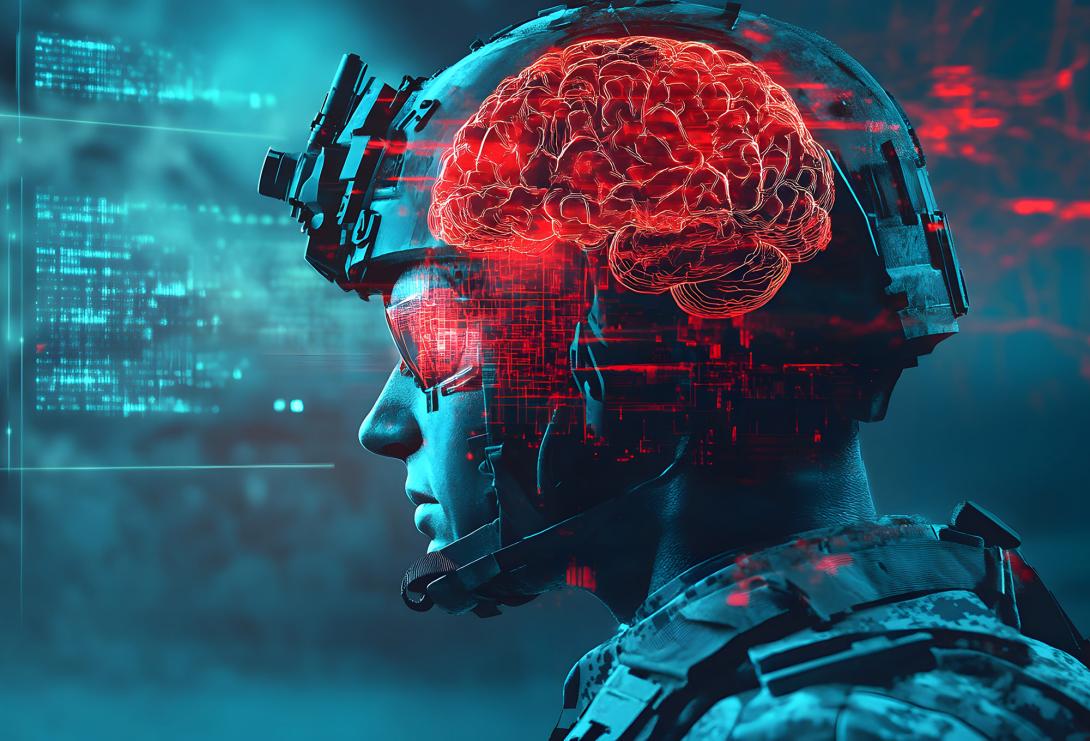
To better understand the cause and effect of traumatic brain injuries (TBI), a collaborative project between the U.S. Naval Research Laboratory (NRL) and Virginia Commonwealth University (VCU) has developed anatomically accurate brain phantoms. The result of the ongoing research could potentially lead to safer headgear for service members.
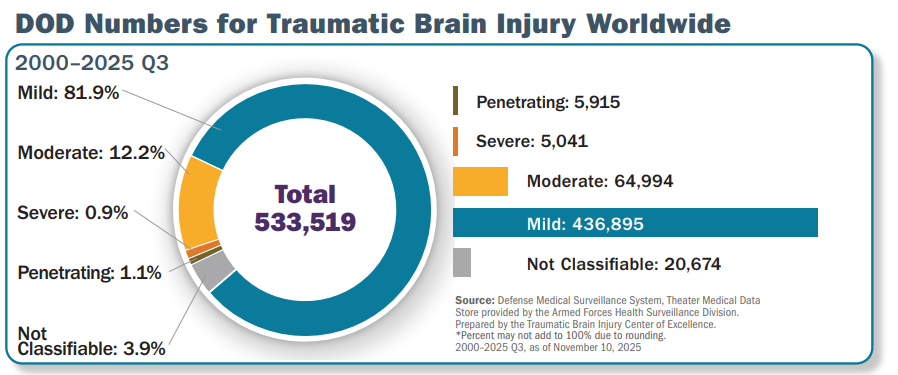
According to the Centers for Disease Control and Prevention, TBI has played a role in more than a million American fatalities in the last 20 years. Additionally, more than 460,000 service members have been diagnosed with TBI between 2000 and 2022.
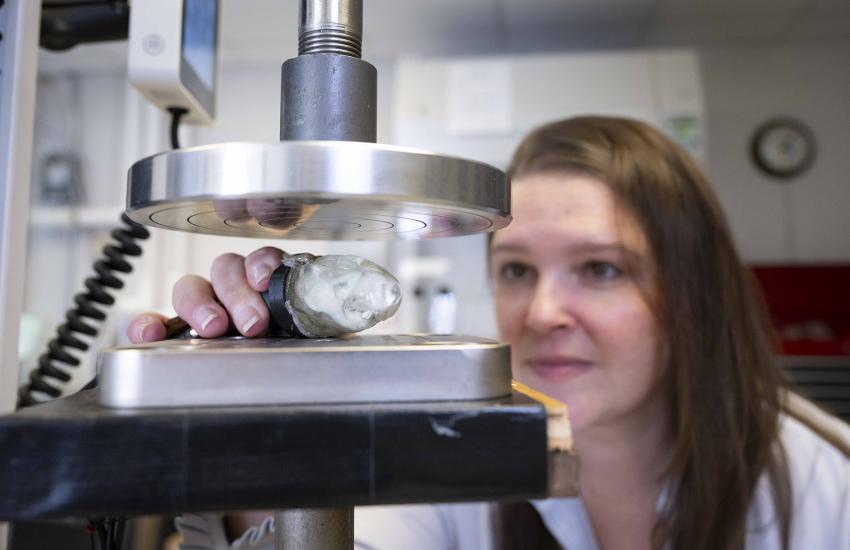
In December, NRL and VCU announced its successful development of an anatomically correct rat brain phantom to mimic the mechanical properties of the brain.
“We have demonstrated how we can record stress or strain in a rat’s brain,” said Ravi Hadimani, associate professor and director of the biomagnetics laboratory at VCU. “We’re using a piezoelectric film and the brain of this rat phantom is made of a viscoelastic material.”
Two polymers are mixed together to form copolymers with crosslinking bonds, Hadimani explained in an interview with SIGNAL Media. “By varying the composition, we can actually obtain varying viscoelastic properties matching that of different areas of the brain.”
Once a concussion-like event impacts the brain phantom, Hadimani and his team are able to measure the stress in the respective areas of the brain and learn which regions undergo greater strain that could cause neuronal damage at the cellular level.
While MRI or CT scans may not show mild TBI damage, effects can manifest through mood swings, memory issues, headaches and more. Macro-structurally, issues may not be present, Hadimani said.
“Micro-structurally, there might be damage, that’s why there is a functional change in the neurons, so when we change the firing patterns of the neurons, then you end up changing how the brain functions that can cause different psychiatric or neurological issues that may not be seen through any imaging technique,” he explained.
For Hadimani, this research has been right up his alley, with his biomagnetics lab also working on magnetic brain simulations. In his lab, Hadimani and his team of graduate and Ph.D. students had developed magnetic coils to stimulate different areas of the brain. “By stimulating different areas, you can treat different neurological or psychiatric disorders,” he said. “We have developed quite a few new [transcranial magnetic stimulation] coils, and these can stimulate focal or specific areas of the brain to treat different disorders.”
As the NRL’s materials division also has a magnetics materials group, the partnership felt seamless when Hadimani crossed paths with NRL scientist Margo Staruch, who has a Ph.D. in physics. During a conversation at a conference, Hadimani learned that Staruch was working to use piezoelectric materials to record stress and strain for TBI research.
Together, the research groups obtained MRIs from an animal or human model to construct a three-dimensional head to fabricate a brain phantom. “That’s how we made these rat phantoms and ... we are making human phantoms as well in the lab,” Hadimani said.
Once the structure is mimicked, the geometrical variation distributes stress and strains across the phantom. “To record it, we have to use some form of material or a film that converts this stress into electrical signals,” he continued. The team was able to successfully record the signals using piezoelectric film, which is made of polyvinylidene fluoride or PVDF, a specialty fluoropolymer plastic used in medical labs for analysis.
“We are still working on nanoparticles,” Hadimani mentioned.
“One of the challenges has been identifying the best method of incorporating the active piezoelectric element while still maintaining the necessary viscoelastic properties to properly mimic the phantom’s response,” Staruch wrote in an email. Ceramic piezoelectrics have a higher signal but are very stiff, she explained.
“There is also a rate dependence in the materials properties, so identifying different methods of testing at various rates to fully capture performance was necessary,” she stated.
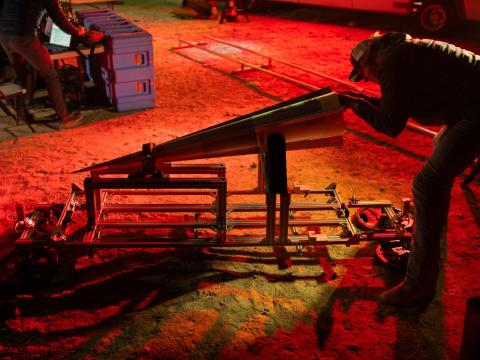
Further experiments have helped the collaborative teams in their research. For example, Hadimani offered, his team had joined efforts with VCU’s Ram Rocketry students, who get hands-on aerospace and rocketry experience by designing high-powered rocketry and partaking in competitions. The initiative is part of VCU’s vertically integrated projects program.
“This Sunday, we have a launch, and in that rocket the payload is our brain phantom,” Hadimani said at the time of his interview. “We have accelerometers that will record acceleration changes inside the brain and with respect to the rocket, so we’ll come to know how much stress the brain takes in 10 or 15 G forces, so that’s ongoing work.”
As studies continue, Hadimani and his fellow researchers hope for their work to positively impact headgear manufacturers.
“Blast injuries need specific types of helmets,” he said, further highlighting the different structures and head anatomies for different individuals, whether based on age, gender, race and so on. To understand stress distribution across different types of structures, Hadimani emphasized the need for funding.
When it comes to working with industry, the VCU professor hopes the brain phantom research can help in the design phase of helmets.
“If any industry is interested in a certain headgear design, we can give our brain phantom for them to test,” he said.
Hadimani also believes in the potential impact of brain phantom research for vehicle crash testing as well as impact sports. “Right now [vehicle crash tests] use mannequins with a few sensors and basically a head shape, but they don’t have brain models inside, so that’s very important to see what kind of impacts generate TBI-like injuries inside the brain,” he said.
Currently, the National Institute of Justice sets the standards for ballistic resistance in the United States, which helps in the specification and design of helmets. Additional standards exist for NATO member states, along with vehicle safety and contact sports.
For former NFL linebacker Tim Johnson, brain phantom research could be critical in the design of his patented Head Impact Prevention (HIP) helmets.
“I think the technology and research could help us,” he told SIGNAL Media. “If we can get it to connect, we could definitely save a lot of tests on actual human beings using the helmet to instead use the brain phantom and test the physical technology.”
The HIP helmets have been designed to reduce the effects of blast, shock, acoustic and impact waves. Drawing inspiration from nature, such as armadillo armor and ram horns, the helmets comprise multiple layers to enable impact forces to move around the helmet and away from the head.
As a professional athlete, Johnson noted problems on the field and made it his mission to solve them.
In his view, although TBI research has improved over the years, there is still work left to do. “We’re just starting to recognize that the brain is more vulnerable, and we would love to help protect it,” he said.
Comments