
A New Vision for Mission Partner Networking
Standardization, architecture and other foundational aspects present a more sophisticated and nimble partner network.
Federated Mission Networking has certainly changed since the days of the Afghan Mission Network, especially with today’s grandchild of that network, the Mission Partner Environment (MPE), which is the United States’ current contribution to coalition and partner computer network environments.
However, the changes have not come far enough, said Jason Martin, the Defense Information Systems Agency’s (DISA’s) component acquisition executive and director of DISA’s acquisition organization. The global warfighting environment and the complexities of digital networking with other nations still present problems.
“On March 1, 2026, three F-15 Eagle United States of America fighter jets were shot down with friendly fire over Kuwait,” Martin stated. “Those are our folks, those are the people that we care about, those are the people that we are to plan and be ready to take care of. While the details are classified and there is an ongoing investigation, we have to assume there was a communication problem. What are we doing to solve that in the future when we are potentially in a larger-scale environment spread across half the globe with many partners and many folks in the coalition working with us to keep everybody out of harm's way?”
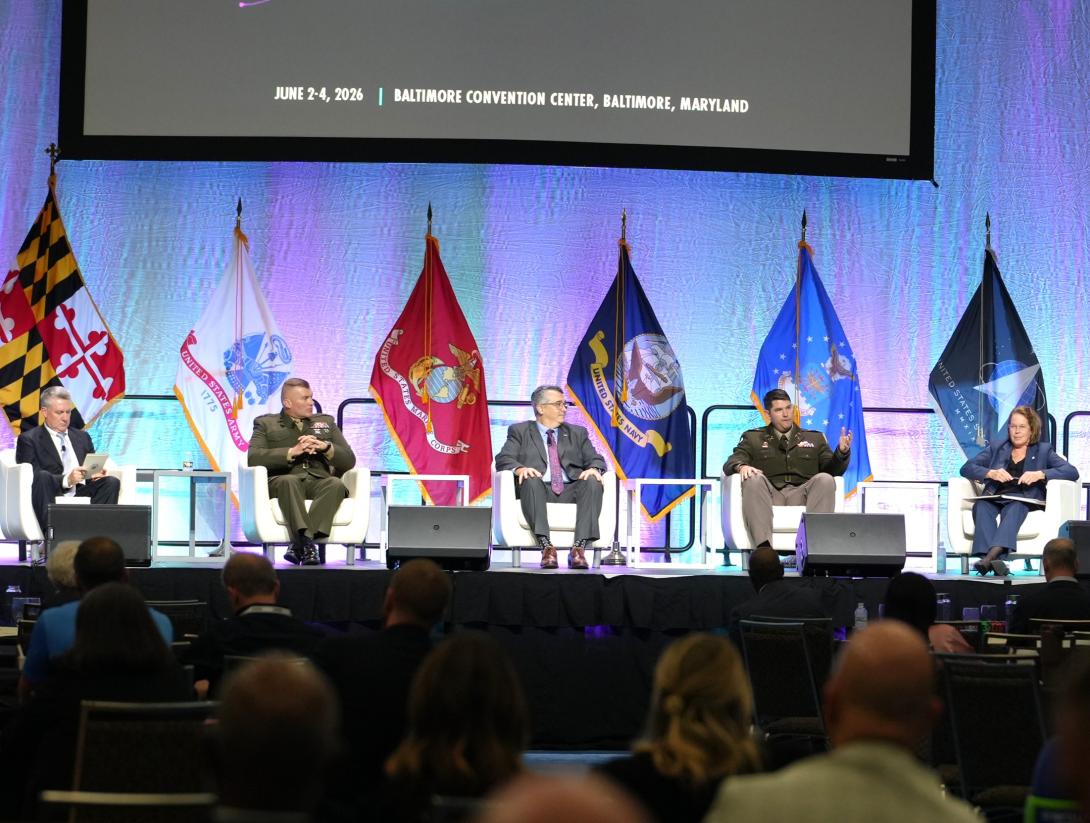
Martin, who conducts acquisition governance and oversight across the entire DISA acquisition portfolio, spoke with several other MPE leaders on June 2 at AFCEA’s TechNet Cyber conference in Baltimore.
He emphasized that the culture has to shift from a network-centric outlook to a data-centric environment, to reflect today’s interconnected sensors, devices and data, not to mention the advent of artificial intelligence on the battlefield.
“I've been at the agency a long time, and I've seen a lot of coalition networks built, torn down,” he said. “Some work well, some have not in the past. But what that did is it created digital islands, customized environments to share information, bilateral and temporary.”
DISA now holds the responsibility for the MPE and is working to change the dynamics by providing the coalition information environment (CIE)—the technical and foundational network infrastructure—for the MPE. This includes network architecture, data-centric foundations and streamlined network/IT services.
“We need to simplify the environment in order for us to defend it as optimally as we can,” said Lt. Col. David Courter, USA, chief, Combatant Command Plan Integration. “We cannot continue to have 11 different SIPR networks [Secret Internet Protocol Router Networks] on the island of Oahu and five different versions of CENTRIX [Combined Enterprise Regional Information Exchange System]. If you look at the European Command’s information technology infrastructure, it is a casbah of multiple stacks and multiple enclaves and multiple classification levels. CIE, really at its core, is, if we're going to start with net, start with data-centricity in mind.”
The MPE leaders are taking an agile approach to rolling out CIE to support a modern MPE. This involves an iterative approach of test, deploy, learn, upgrade and repeat, Courter explained.
The CIE effort started last spring with the U.S. Indo-Pacific Command (INDOPACOM), he said.
“We took a very specific warfighting function, one near and dear to my heart as an artilleryman, the fires warfighting function,” Courter stated. “And we looked at how do we pull on this thread in order to develop the CIE that we need.”
Next, they will advance the MPE CIE solutions through the Joint Staff J6 Olympus Fires demonstration, which is tied to an INDOPACOM exercise this fall.
“That is the mechanism, the ways and means in which we will continue to deploy our CIE environment,” Courter explained. “That will scale and post fall, we will transition with a focus on EUCOM [U.S. European Command] to scale CIE to that environment.”
The MPE leaders will continue to work with allied nations and partners to grow understanding of the MPE/CIE capabilities, so that they are comfortable integrating in defense activities, exercises and conflicts.
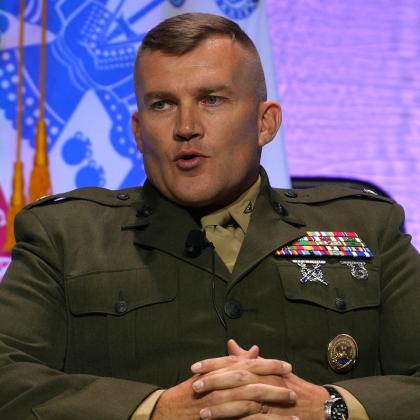
“The architecture has got to be able to seamlessly bring in our allies and partners, depending on the operational reality that we have,” advised Col. Michael “Toby” Hlad, USMC, commander, Regional Field Command-Pacific, DISA. It is all about building that trust, building the right architecture, and from my standpoint, defending it together.”
Nick Creswell, who is the new portfolio acquisition executive, director of MPE at DISA, added that, “there are multitudes of ways that we continue to build trust across the allies and the partners, and some of that is through just our architectural means and the way that we are constructing an environment overall, the policy enforcement mechanisms that we're putting in place, but then also this idea that everything is in kind of a data-centric environment.”
In addition, the MPE/CIE approach includes the creation of a global network operations and security center, or GNOSC, as a way to elevate the protection and defense of the partner environments.
“We need to integrate the way in which we defend the environment,” Courter shared. “We need to share data, we need to have SOC to SOC [security operations center], NOC to NOC [network operations center], human to human connection, and how we, in an integrated fashion, operate and defend the environment . . . and our ability to secure, operate, and defend the environment is slightly different, because it's data-centric, and it instantiates the zero-trust lessons learned.”
The architecture has got to be able to seamlessly bring in our allies and partners, depending on the operational reality that we have.
They have almost reached initial operational capability of the GNOSC, based around ideas of DISA global.
“That will expand to multiple RNOSCs [regional network operations and security centers] given multiple regions, but we don't fully know what a mature model looks like, because there is still learning that we have to do,” Courter said.
However, the key to the CIE approach is standardization, with a common set of data standards, said Jenniffer Minks, the Joint Staff’s J6 and deputy director for Command, Control, Communications, Computers, and Cyber Integration.
“One of the ways that we build that trust is through working with our partners to define those standards and specifications,” she noted.
The J6 works with the Federated Mission Networking Management Group, with 43 different nations or affiliates like NATO.
“That is where we talk about things like data sovereignty, that's a big deal,” Minks expressed. “How do we do that with cloud federation? How do we do ICAM [identity, credential and access management] federation? When we do all of that together, we build trust in each other, and that is the key as we move forward.”
With a common set of data standards, along with a common set of core services, the U.S. military can broker and federate their network environments together with allies and partners without having to replicate a new network environment every time, Courter reasoned.
For Lt. Gen. Paul Stanton, USA, the director of DISA, management of the MPE—and the forthcoming CIE foundations—will strengthen coalition warfare with whomever we partner during a military activity.
“We will see an environment that supports the dynamic nature of fighting alongside our partners,” Stanton explained. “I assert that in the next war, or fight that I hope never happens, we do not know who is going to be in that coalition ahead of time. I also assert that the coalition membership will change based off of the geopolitics in the operating environment. That implies that we have an environment where you can add or drop members from the coalition. The historic way of establishing partner environments that were hardware and network-interface based cannot support that dynamic nature of inviting partners into the coalition, so our solution will meet that challenge.”
TechNet Cyber is organized by AFCEA International. SIGNAL Media is the official media of AFCEA International.
Comments