
U.S. Space Force To Launch Sensing and Targeting Capabilities
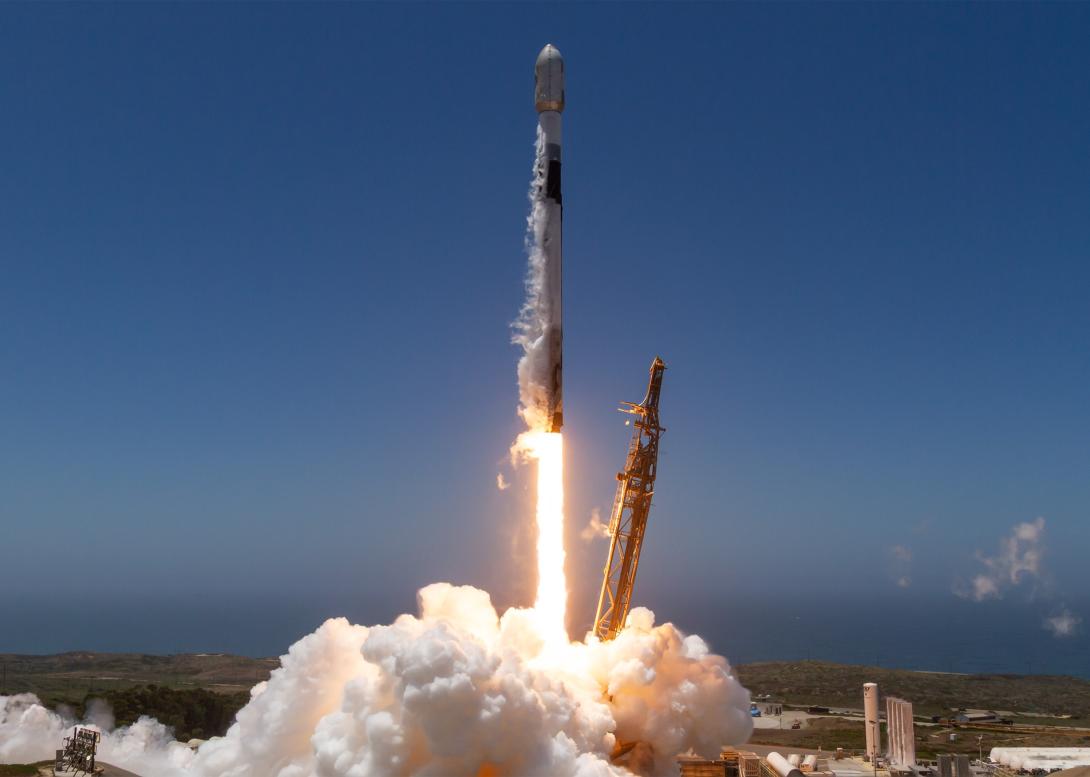
The U.S. Space Force announced Wednesday it has awarded SpaceX two National Security Space Launch (NSSL) Phase 3 Lane 1 task orders worth $1.6 billion to launch space-based sensing and targeting capabilities. The task orders include 18 Falcon 9 launches from Vandenberg Space Force Base in California.
According to Wednesday’s Space Force press release, all 18 launches are expected to occur by the end of 2027.
“Sensing and targeting of airborne objects from space and providing near-real-time communications across the Joint Force are vital to the defense of our nation. The rapid acquisition capabilities provided by our NSSL Phase 3 dual-lane approach allows us the flexibility to deliver satellites for our warfighters in an increasingly efficient manner,” said Space Force Col. Eric Zarybnisky, acting portfolio acquisition executive for space access.
The Space Force is pushing for rapid acquisition of sensing and targeting capabilities, as the service announced its Space-Based Airborne Moving Target Indicator (SB-AMTI) program in April. The initiative delivers an integrated satellite architecture composed of space-based sensors, artificial intelligence-driven ground processing and secure communication links, according to Space Systems Command public affairs.
“Our mission is to deliver a resilient sensing layer that ensures our joint warfighters maintain a decisive information advantage in the air domain—especially in a denied or contested environment,” said Space Force Col. Ryan Frazier, acting portfolio acquisition executive for Space-Based Sensing and Targeting. “We are providing continuous oversight where traditional sensors cannot reach to protect their freedom of maneuver.”
The Space Force kicked off its SB-AMTI program by awarding $4.16 billion to SpaceX. This award is expected to produce a constellation of satellites with resilient tracking capabilities by 2028, according to a May 29 Space Systems Command press release.
The goal of the program and subsequent awards is to develop a persistent, global capability to sense and track airborne targets from space.
“By focusing these capabilities to the space domain, we are providing the Joint Force with sustained battlespace awareness of contested airspace,” Frazier said. “We are beginning development and integration efforts immediately to meet the program's rapid deployment milestones and address emerging national security requirements.”



Comments