
U.S. Space Force Procures Additional Next-Generation GPS Satellites
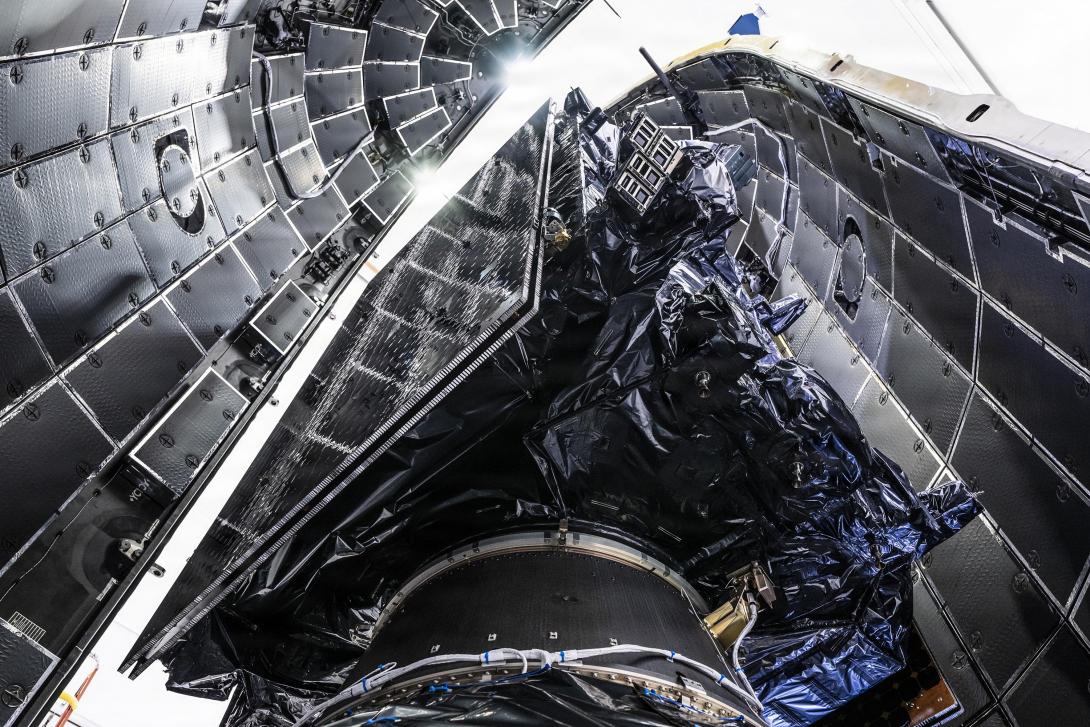
Space Systems Command (SSC) announced Tuesday it has procured two additional GPS IIIF satellites to advance its global positioning, navigation and timing architecture.
According to an SSC press release, Erin Carper, the acting U.S. Space Force portfolio acquisition executive for Satellite Communications and Positioning, Navigation and Timing, awarded Lockheed Martin a $514.4 million award for Space Vehicles 23 and 24.
The two additional GPS IIIF satellites will be equipped with an advanced anti-jamming capability, called Regional Military Protection, and robust signal to operate in contested environments once in orbit, the release said.
GPS IIIF, or GPS III Follow-on, is the next generation of satellites from Lockheed Martin expected to begin launching in 2028. These new satellites follow the GPS III series, which first launched in 2018 as the third generation of U.S. Space Force GPS satellites, also manufactured by Lockheed Martin.
SSC launched its last GPS III satellite on April 21 from Cape Canaveral Space Force Base.
“As we send off the final GPS III satellite, it’s a chance to celebrate the thousands of men and women who have worked on the program that should be proud of the GPS III era and their accomplishments,” said Scott Thomas, GPS III program manager with Combat Forces Command, the Space Force’s operational field command. “GPS III has a unique culture of bringing together brilliant acquisition, industry and operational professionals to accomplish big things—and GPS IIIF will be no different.”
Ten GPS III satellites are currently in operation, and with this procurement, SSC has contracted 14 GPS IIIF satellites, the release stated.
“We are ensuring our warfighters and partners maintain a distinct tactical advantage, while continuing to provide the gold-standard service that billions of civilian users rely on every single day,” Carper said.



Comments