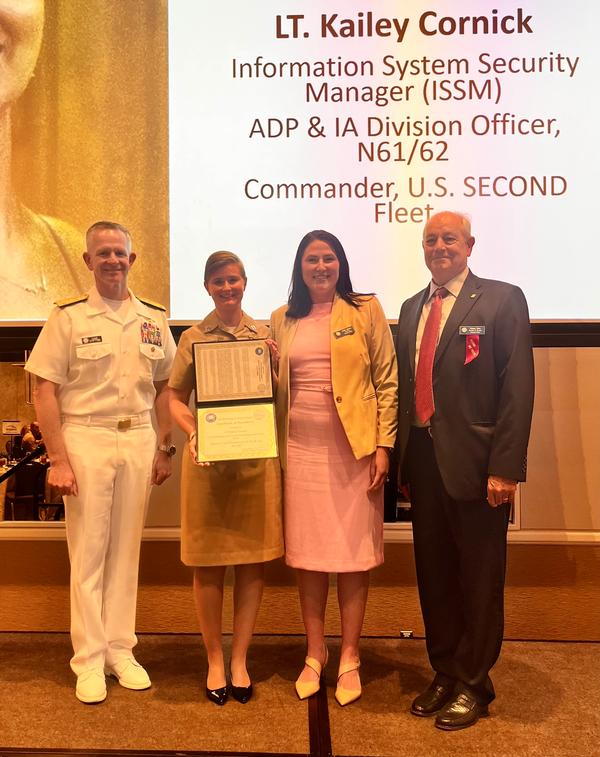
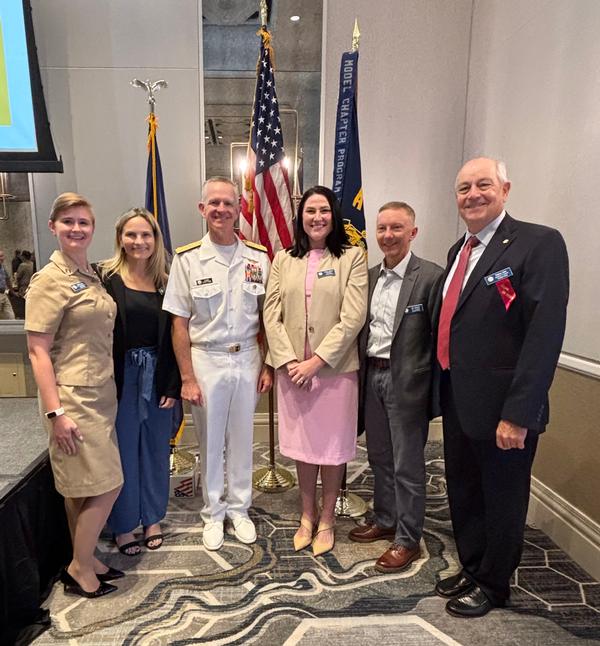
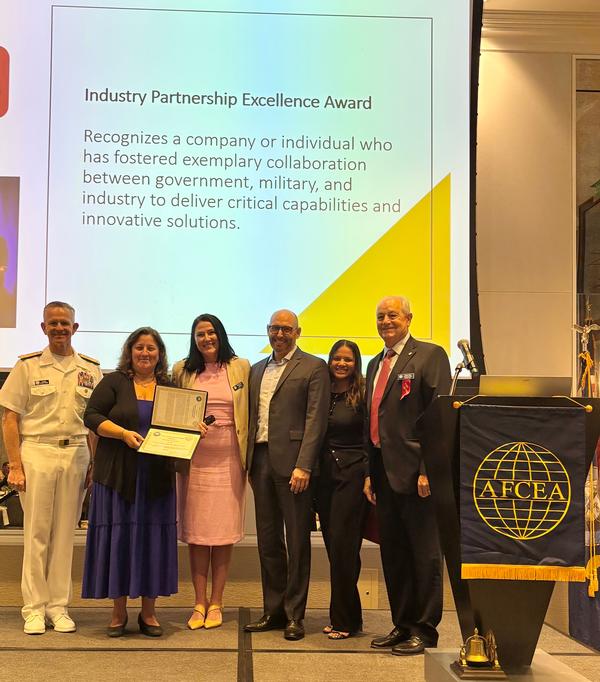
During a recent guest speaker luncheon, the Hampton Roads Chapter welcomed Vice Adm. Daniel Dwyer, USN, deputy chief of naval operations for Operations, Plans, Strategy and Warfighting Development (N3N5N7), at the Office of the Chief of Naval Operations. Dwyer provided an in-depth perspective on the Navy's vital role in preserving global stability, protecting freedom of navigation and securing the maritime domain for future generations.
Dwyer emphasized that the Navy operates within an actual global water economy, where prosperity and security depend on open and accessible sea lanes. The Navy's mission to uphold freedom of navigation remains foundational, ensuring that international commerce can flow unimpeded through vital maritime corridors.
Today, the fleet consists of 293 ships, with more than 100 ships and submarines actively deployed worldwide. These forward-deployed forces provide not only military capability, but also significant diplomatic leverage, reinforcing U.S. commitments and strengthening relationships with allies and partners. Through persistent presence, the Navy helps project and protect commercial shipping across critical sea lanes.
Dwyer noted that the maritime environment remains contested. In 2025 alone, U.S. Navy ships were targeted in more than 150 attacks, many launched from Yemen. In each case, ships successfully defended themselves at sea while continuing to operate forward. These actions underscore the Navy's unwavering commitment to regional stability and its readiness to respond decisively to hostile actions.
Despite ongoing challenges, sea lanes in the eastern Mediterranean and the Indo-Pacific remain open, and partnerships across both regions continue to flourish. Forward presence and cooperation with allies serve as powerful deterrents while reinforcing shared security objectives.
Looking to the future, Dwyer stressed that the fleet and force are deeply invested in modernization. The Navy is integrating advanced technologies to remain relevant across every domain-maritime, air, land, space and cyber. The U.S. defense budget reflects this commitment, including the procurement of 19 ships, such as submarines and vital support vessels.
Additionally, advanced procurement for CVN 82 is underway this year, while CVN 80 and 81 are currently under construction in Hampton Roads-demonstrating long-term investment in naval power.
Equally important, Dwyer emphasized that people remain the Navy's decisive edge. Continued investment in sailors includes expanded training and professional development programs designed to support increasingly advanced platforms and missions. In June 2025, the Navy reached its active-duty end strength and recruiting goals-three months ahead of schedule-a testament to the dedication of the force and those who support it.
The admiral also highlighted opportunities for organizations through AFCEA to contribute meaningfully. Success will require innovative ideas, engineering excellence, secure code, scalable solutions and a commitment to advancing both technology and thinking. Partnerships with academia and shipyards are essential to meeting the urgency of today's challenges and cultivating the talent required to win.
He concluded with a message of resolve: the challenge is real, but so is the Navy's readiness. Through unity of effort, continued innovation and investment in people and platforms, the Navy moves forward as one team, one mission and one future to secure. |