In April, the chapter hosted its Future of GSA Schedules: GSA Updates & VA TAC Insights event at the Oyster Point Hotel, Red Bank, New Jersey, drawing more than 100 government and industry professionals.
The keynote presentation by Joel Lundy focused on the Office of Centralized Acquisition Services (OCAS), a centralized procurement office launched in 2025 to streamline acquisition of common goods and services. Lundy highlighted the OCAS' expanding role in managing information technology (IT) contracting for agencies such as the Office of Personnel Management, the Small Business Administration and the Department of Housing and Urban Development, with plans to support major government-wide vehicles. Early results from the pilot show a 37% improvement in procurement efficiency, reduced procurement lead times to approximately 38 days, and millions in cost savings through enterprise buying strategies. The OCAS is also piloting artificial intelligence (AI)-driven tools to further modernize acquisition processes.
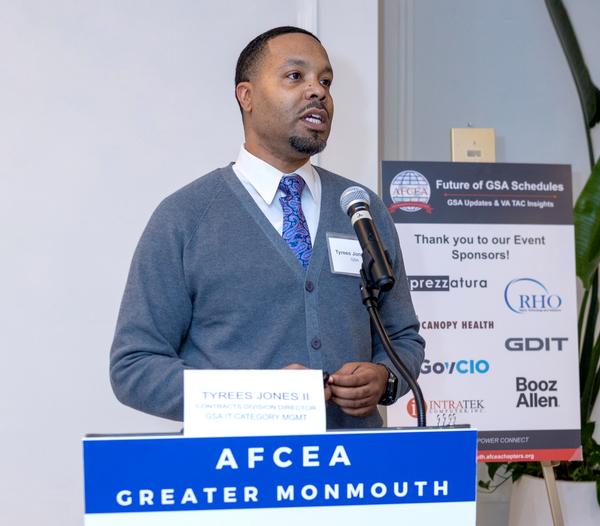
In the second session, Tyrees Jones provided an overview of the Multiple Award Schedule (MAS), government-wide acquisition contracts and the OneGov approach. He emphasized the government's preference for these best-in-class vehicles to meet category management goals and outlined the continuous, open nature of MAS contracting, noting the importance of staying current with evolving requirements and modifications.
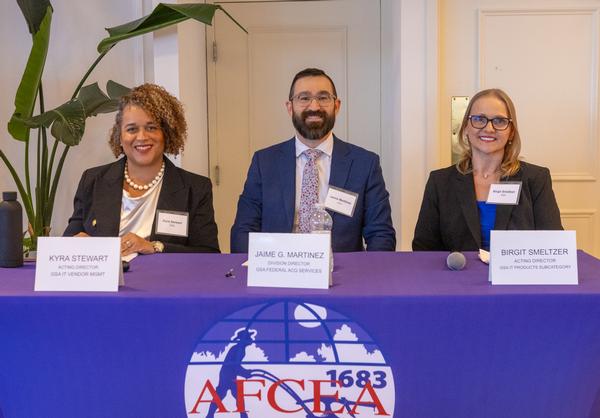
A panel discussion on OneGov featured Kyra Steward, Brigit Smeltzer and Jamie Martinez. Panelists described OneGov as an enterprise-buying strategy designed to aggregate federal demand and negotiate directly with original equipment manufacturers and software providers for improved pricing and simplified contracting.
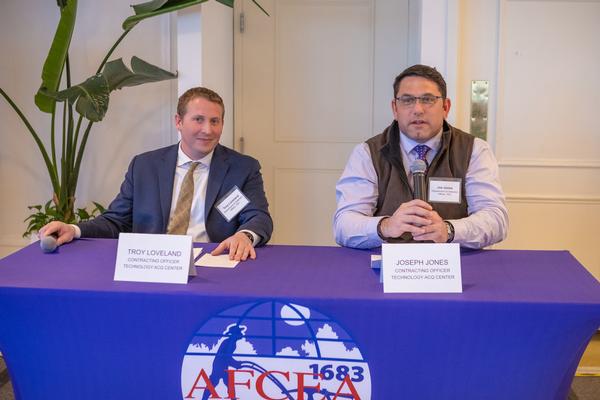
The event concluded with a question-and-answer session featuring contracting officers from the Veterans Administration Technology Acquisition Center, including Troy Loveland and Joseph Jones. Discussion topics included updates on the SPRUCE vehicle, the impact of the Department of Government Efficiency, request for information (RFI) responses and the continued use of market research to inform contract strategies. The speakers emphasized the importance of industry participation and well-developed RFI responses to support the development of effective performance work statements. Questions were also addressed regarding T4NG2, noting that no updates are available at this time.
The chapter thanks its speakers, sponsors and attendees for contributing to a highly informative and engaging program. |