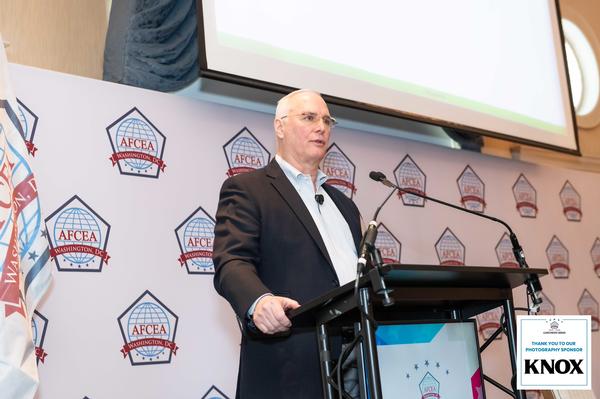
The chapter convened government, military and industry leaders in March for its latest luncheon, "Hardening the DOW's Operational Technology," bringing focused attention to securing operational technology (OT) in support of mission resilience. The event featured keynote remarks from John Garstka, director of Cyber Warfare, Office of the Assistant Secretary of War, followed by a panel of senior cyber warfare leaders. The discussion highlighted the convergence of cyber, physical infrastructure and warfighting capabilities across the Department of War.
The keynote portion of the program focused on cybersecurity of operational systems as a critical component of national defense, particularly as threats increasingly target systems that underpin both military and civilian operations. The discussion emphasized mitigating cyber risk to critical infrastructure by improving understanding of dependencies on commercial systems that support Department of War operations. Garstka also noted that potential future conflicts are likely to begin in cyberspace and may directly impact the U.S. homeland through disruption of these systems.
A central theme was the evolving nature of conflict, comparing historical shifts in warfare with how cyber is a new domain that can directly impact operations before traditional engagements occur. The discussion highlighted how disruptions to foundational dual-use systems such as power, cooling and control infrastructure can degrade mission capability. The concept of assessing risk through a "mission stack" approach, linking foundational OT systems to higher-level mission outcomes, was also introduced to better understand operational dependencies.
Following the keynote, a panel of senior defense leaders explored how these priorities are being addressed in practice. The panel featured Brig. Gen. Jason Christman, Air National Guard assistant to the commander, 16th Air Force (Air Forces Cyber), U.S. Department of the Air Force; Barry Humphrey, program manager, R&D, Defense Logistics Agency; Wanda Jones, principal cyber advisor, U.S. Department of the Air Force; and Anne Marie Schumann, principal cyber advisor, U.S. Department of the Navy, and was moderated by Daryl Haegley, technical director, Control Systems Cyber Resiliency, U.S. Department of the Air Force.
The discussion focused on the need to approach IT and OT as interconnected domains supporting mission effectiveness. Panelists addressed coordination across services, integration of cybersecurity into acquisition and efforts to better align policy, technology and workforce across the enterprise. Collaboration with industry was also discussed in the context of implementing these approaches and supporting operational requirements.
Looking ahead, the conversation turned to emerging technologies and evolving threats that will continue to shape the operational environment. Considerations around encryption, quantum capabilities and future workforce development were identified as areas requiring sustained focus. Across the program, a consistent message emerged: securing operational technology is essential to maintaining mission readiness in a contested and increasingly interconnected domain.
The chapter continues to host a range of programs throughout the year, including its luncheon series featuring senior defense and technology leaders. Organizations and individuals interested in upcoming events or sponsorship opportunities can find additional information through the AFCEA Washington DC website. |
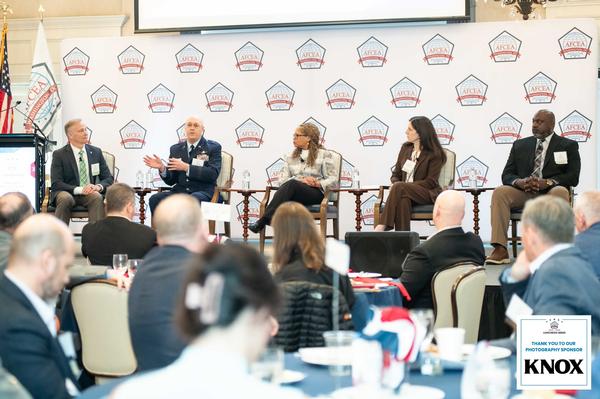
In March, panelists Brig. Gen. Jason Christman, Air National Guard assistant to the commander, 16th Air Force (Air Forces Cyber), U.S. Department of the Air Force; Barry Humphrey, program manager, R and D, Defense Logistics Agency; Wanda Jones, principal cyber advisor, U.S. Department of the Air Force; and Anne Marie Schumann, principal cyber advisor, U.S. Department of the Navy; and moderator Daryl Haegley, technical director, Control Systems Cyber Resiliency, U.S. Department of the Air Force, discuss hardening the DOW's operational technology. |