The chapter convened government, military and industry leaders for its latest luncheon, Future Readiness: DOW CIOs Mapping Digital Modernization and Operational Readiness through AI and Zero Trust 2.0. The senior Department of War information leaders discussed the priorities shaping enterprise information technology, cybersecurity and data strategy across the department.
The program opened with networking, providing attendees the opportunity to connect with peers, government representatives and industry partners before formal remarks began. As with all AFCEA Washington DC Chapter events, the luncheon served as a forum for direct engagement, reinforcing the chapter's role in fostering collaboration across the defense technology community.
The panel featured Roger Greenwell, chief information officer and risk management executive, Defense Information Systems Agency; Eric Oliver, director of information technology and chief information officer, Department of Defense Cyber Crime Center; David Markowitz, deputy chief information officer, U.S. Army; Keith Hardiman, deputy chief information officer, Department of the Air Force; and David R. Reeves III, chief information security officer, Army National Guard, and was moderated by Francis Rose.
A central theme of the discussion was the need to improve interoperability across the services. Panelists emphasized the importance of a common enterprise architecture that enables shared capabilities while supporting mission-specific requirements. Efforts to align systems and data across organizations were highlighted as essential to ensuring joint operational effectiveness.
The conversation also addressed ongoing challenges related to data-sharing. Panelists noted that barriers are often procedural rather than technical, with classification requirements, permissions and policy constraints limiting access to critical information. The need for standardized approaches to data tagging, identity management and access control was discussed as a way to enable more efficient and secure data-sharing across the enterprise.
Zero trust remained a key focus, with discussion centered on the importance of identity, credential and access management as the foundation for implementation. Efforts across the department to consolidate systems, reduce complexity and adopt AI-enabled capabilities to improve visibility and detect anomalies into enterprise environments were highlighted as part of broader modernization initiatives.
Panelists discussed the need to reform the Authority to Operate process by moving away from static, compliance-based approaches toward more continuous, data-driven risk management models. Efforts to streamline approvals through inheritance and automated processes were highlighted as mechanisms to accelerate capability delivery.
The role of industry was highlighted in the context of adopting commercial technologies and supporting secure, scalable solutions. Panelists noted ongoing challenges, including vendor lock-in and meeting federal compliance requirements, while emphasizing the importance of collaboration.
Overall, the consistent message was that achieving digital modernization and operational readiness will require coordinated efforts between government and industry to improve interoperability, strengthen identity-based security and enable more agile approaches to risk management.
The chapter hosts a range of programs throughout the year, including its luncheon series featuring senior defense and technology leaders. Upcoming events and sponsorship opportunities can be found at the AFCEA Washington DC website.
|

Francis Rose, Fed Gov Today, moderates as panelists (l-r) Roger Greenwell, chief information officer, risk management executive, Defense Information Systems Agency; David Markowitz, deputy chief information officer, U.S. Army; Keith Hardiman, deputy chief information officer, Department of the Air Force; David R. Reeves III, chief information security officer, Army National Guard; and Eric Oliver, director of information technology and chief information officer, Department of Defense Cyber Crime Center, discuss Future Readiness: DOW CIOs Mapping Digital Modernization and Operational Readiness through AI and Zero Trust 2.0, during the April luncheon. |
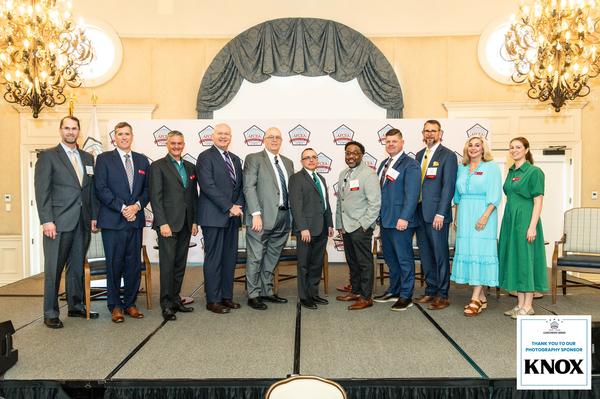
Pictured are (l-r) Oliver; Mark Johnson, chapter board member; Kevin Griffith, chapter president; Rose; Greenwell; Markowitz; Keith Hardiman, panelist; Reeves; and Tim Silk, underwriter sponsor representative; Theresa Pines, chapter board member; and Michelle Dreimann, chapter vice president of programs, at the April event. |



